
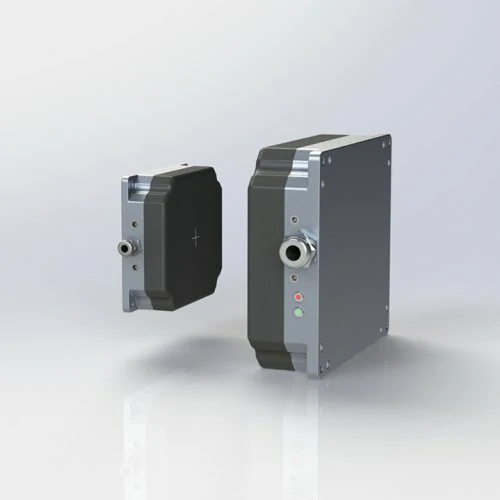
防爆450W-36V-10A无线充电器是青岛鲁渝能源科技有限公司自主研发的一款具有防水、防尘、防爆功能的机器人无线充电产品,可应用于巡检机器人无线充电等各类对防水防爆有要求的移动机器人,能够实现机器人自动充电、无人化运行,降低维护成本,使用安全便利。
本产品具有防水功能,防护等级达IP67。能够精准控制耦合电磁场发射强度,充电防爆,达到二类防爆标准,可满足石油、天然气、矿场等行业防爆要求。升级结构设计,采用高效功率变换器,背置金属铝外壳,具有较强散热效果。
本产品有2种启动方式:485受控启动、靠近即充。
防爆标志:Ex mb ⅡC T6 Gb;Ex mb IIIC T80℃ Db
This 450W 36V 10A Explosion-proof Wireless Charger is designed for hazardous-area inspection robots, explosion-proof robots, AGV and industrial mobile robots. It supports automatic charging for AGV, AMR, inspection robots and industrial mobile equipment, helping reduce manual plug-in work and improve unattended operation in demanding industrial environments.
| 额定功率Rated Power | 450W |
|---|---|
| 输入电压Input Voltage | 48VDC |
| 充电电压Charging Voltage | 25-45V |
| 充电电流Charging Current | 10A |
| 最大传输效率Max Efficiency | ≥85% |
| 标准垂直工作距离ZVertical Working Distance Z | 10-20mm |
| 标准长轴偏移距离XLong-axis Offset X | 20mm |
| 标准短轴偏移距离YShort-axis Offset Y | 10mm |
| 充电管理Charging Management | 恒流-恒压 |
| 过温保护Over-temperature Protection | 有 |
| 输出过流保护Output Over-current Protection | 有 |
| 输出过压保护Output Over-voltage Protection | 有 |
| 发射器通信接口Transmitter Communication | RS485*1 |
| 接收器通信接口Receiver Communication | RS485*1 |
| 报警及充电状态指示Alarm and Charging Status | 声光报警 |
| RF数据通信频率RF Communication Frequency | 2.4GHZ |
| 温度范围Temperature Range | -40~60℃ |
| 湿度范围Humidity Range | 0-90% |
| 存储温度Storage Temperature | -40~70℃ |
| 发射器防护等级Transmitter Protection Rating | IP67 |
| 接收器防护等级Receiver Protection Rating | IP67 |
| 最大垂直工作距离ZmaxMax Vertical Working Distance Zmax | 30mm @Xmax=10mm |
|---|---|
| 最大长轴工作距离XmaxMax Long-axis Working Distance Xmax | 60mm @Zmax=25mm |
| 发射器尺寸mm(长*宽*厚)Transmitter Size (L*W*H) | 160*140*49 |
|---|---|
| 接收器尺寸mm(长*宽*厚)Receiver Size (L*W*H) | 160*140*49 |
| 发射器重量kgTransmitter Weight | 2 |
| 接收器重量kgReceiver Weight | 2 |
机身防水,防爆充电,防护等级达IP65;独特结构设计,温升低;外型设计美观,适用于各类户外机器人无线充电。
面向防爆机器人和工业移动设备补能需求,减少人工插拔,提高无人值守运行能力。
面向防爆机器人和工业移动设备补能需求,减少人工插拔,提高无人值守运行能力。
面向防爆机器人和工业移动设备补能需求,减少人工插拔,提高无人值守运行能力。
面向防爆机器人和工业移动设备补能需求,减少人工插拔,提高无人值守运行能力。
面向防爆机器人和工业移动设备补能需求,减少人工插拔,提高无人值守运行能力。