
Automated Livestock Systems for Modern Farming
Livestock robots refer to intelligent equipment used in the entire process of livestock and poultry breeding by integrating cutting-edge technologies such as sensor technology, artificial intelligence, automated control systems, and the Internet of Things. Its core functions cover environmental monitoring, feeding management, milking operations, disease warning, cleaning and disinfection, and data collection, aiming to improve breeding efficiency, reduce labor costs, and achieve precise and sustainable production. According to different work objects, livestock robots can be divided into poultry breeding robots, such as automatic egg pickers and hatching monitoring systems; livestock breeding robots, such as intelligent milking machines and automatic feeding vehicles; aquaculture robots, such as feeders and water quality monitoring drones.
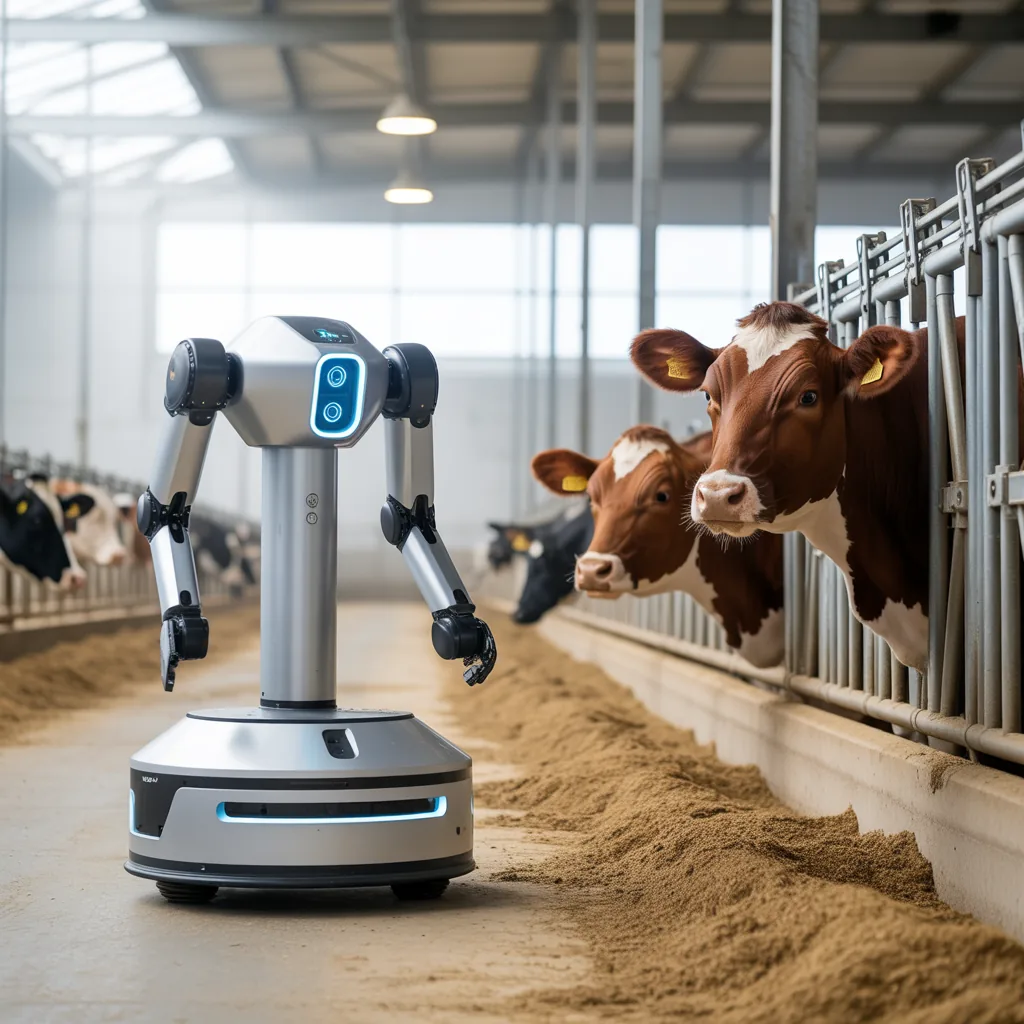
In recent years, with the aging of the population and the shortage of rural labor, traditional livestock farming has faced rising costs and efficiency bottlenecks. According to the China Labor Statistics Yearbook, the number of agricultural employees in my country will be 169 million in 2022, a decrease of approximately 27% compared with 2015, while the proportion of large-scale breeding farms is gradually increasing. The "14th Five-Year Plan" National Agricultural Mechanization Development Plan shows that the base period value of my country's livestock industry mechanization rate in 2020 is 36%, and the requirement is to reach more than 50% in 2025. This situation has promoted rigid demand for automation and mechanized equipment. In addition, policy-level documents propose to accelerate the mechanization process of livestock breeding, focusing on breakthroughs in technologies such as intelligent feeding, environmental regulation, and disease prevention and control, providing clear policy guidance for the livestock robot industry.
From the perspective of technical architecture, livestock robots are composed of the sensing layer: temperature and humidity sensors, cameras, RFID tags, etc.; the decision-making layer: AI algorithms, big data analysis platforms, etc.; and the execution layer: robotic arms, mobile chassis, etc. The core difficulty lies in adapting to the dynamic operating requirements in complex biological environments. For example, milking robots need to accurately locate cow udders through visual recognition; feeding robots need to adjust the feed ratio according to individual growth stages; inspection robots need to accurately identify the body shape of pigs and operate stably in the harsh environment of the pig house. These all rely on the deep integration of multidisciplinary technologies.