Archive

Article Archive

Articles about wireless charging, industry news and robot energy supply solutions.

Smart livestock farming robot wireless charging system for automated barns

Wireless charging of intelligent breeding robots: an unattended energy replenishment method for large-scale livestock farms

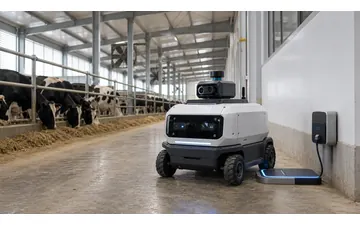
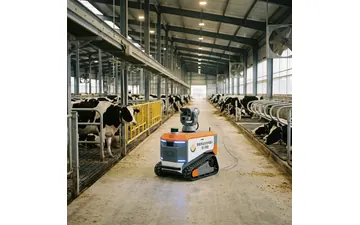
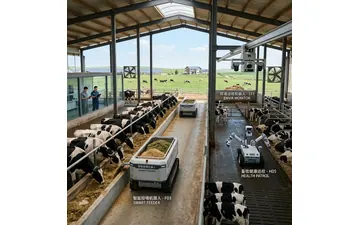
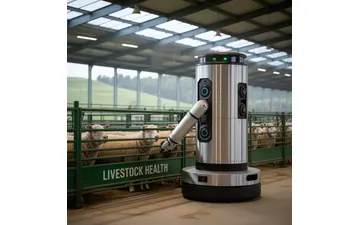
Intelligent breeding robots undertake tasks such as inspection, feeding, cleaning and disinfection, and environmental monitoring in cattle houses, pig houses, sheep houses and large-scale breeding farms. Wireless charging can realize unattended energy replenishment through small automatic charging stations, reduce manual plugging and unplugging, moisture corrosion and interface wear, and improve the continuous operation capability of livestock robots.

Autonomous cleaning boat wireless charging system with compact dock station

Wireless charging of unmanned cleaning boats: automatic docking energy replenishment solution for water surface environmental protection equipment

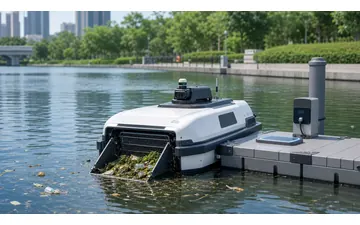
Unmanned cleaning boats need to perform floating object cleaning, water quality inspection and environmental monitoring tasks for a long time in scenes such as rivers, lakes, park water systems and reservoirs. Wireless charging can realize automatic replenishment through small charging modules on the shore or floating dock, reducing manual plugging and unplugging and interface maintenance in humid environments.

Tomato picking robot wireless charging system with compact charging pad

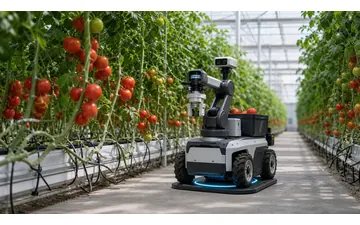
Wireless charging of tomato picking robots: automatic energy replenishment solution under high-frequency greenhouse operations

Tomato picking robots need to perform identification, positioning, picking and handling tasks for a long time in greenhouses. Wireless charging can automatically replenish energy through a small and low-profile charging station, reducing manual plugging and interface wear, and helping the picking robot maintain continuous operation in high-humidity and high-frequency operating environments.

Greenhouse robot wireless charging system for smart agriculture automation

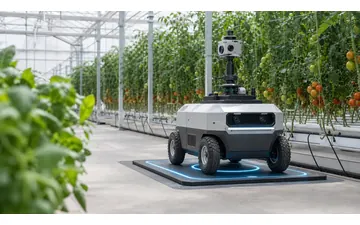
Wireless charging of greenhouse robots: an automatic energy replenishment solution for unmanned operation of smart agriculture

Greenhouse robots need to operate stably for a long time in inspection, picking, transportation, plant protection and environmental monitoring. Wireless charging can help robots achieve automatic energy replenishment in humid, high-temperature and high-frequency operating environments, reduce manual plugging and interface wear, and improve the unmanned operation capabilities of smart agricultural systems.

Outdoor unmanned inspection vehicle wireless charging system for industrial robots

Wireless charging of outdoor unmanned inspection vehicles: a key energy replenishment method to achieve all-weather unattended inspections

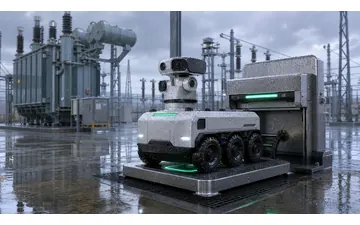
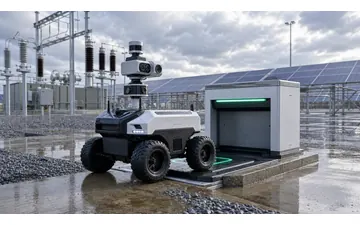
Outdoor unmanned inspection vehicles need long-term stable operation in scenarios such as electric power, petrochemicals, mines, parks and ports. Wireless charging uses non-contact automatic energy replenishment to reduce interface wear and manual plugging and unplugging risks, helping inspection vehicles to achieve unattended inspections in outdoor environments such as rain, snow, dust, high and low temperatures.

AMR definition and functional applications

AMR definition and functional applications

AMR definition: Automated Mobile Robot, that is, "autonomous mobile robot". AMR can use software to draw maps inside the factory or import factory building drawings in advance to achieve navigation. This feature is equivalent to a car equipped with GPS and a set of pre-installed maps. When the car is set with people's home and work addresses, it can generate the most convenient route based on the location on the map. AMR functions and applications: With the rise of algorithms, the concept of AMR has been talked about more in recent years. This relies on programming.

Application of wireless charging technology of switch room inspection robot in intelligent power operation and maintenance

Application of wireless charging technology of switch room inspection robot in intelligent power operation and maintenance

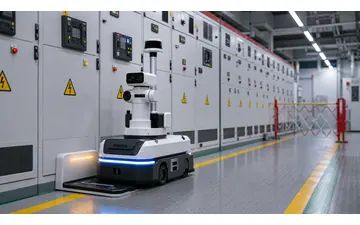
In the power distribution system and substation operation system, the switch room assumes the important responsibility of centralized control and protection of equipment. As the safety and continuity requirements of power systems continue to increase, the traditional model that relies on manual inspections is gradually transforming into automation and intelligence. Switch room inspection robots combined with wireless charging technology are becoming an important technical direction for modern power operation and maintenance. 1. Realistic needs for intelligent inspection of switch rooms. There are a large number of internal equipment in the switch room and long running times. The following long-term operation and maintenance pain points exist: High frequency of inspections and high labor costs. Manual inspection.

The demand for wireless charging by computer room inspection robots

The demand for wireless charging by computer room inspection robots

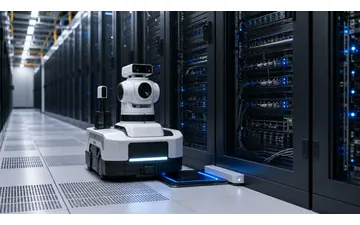
With the further development of the information age, data centers, as the core node of information circulation, have received more and more attention. In order to ensure the efficient operation of data centers, computer room inspection robots (hereinafter referred to as inspection robots) play an increasingly important role in modern data centers. Inspection robots can greatly improve the operation and maintenance efficiency and reliability of data centers through automated inspections, fault detection and equipment monitoring. However, the energy supply problem of inspection robots, especially during long-term and high-frequency inspection tasks, has become a constraint on its performance and efficiency.

IGV definition and functional application

IGV definition and functional application

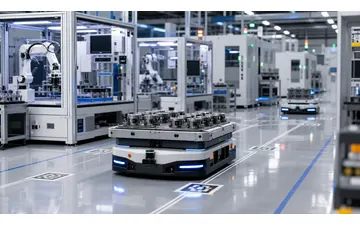
IGV definition: Intelligent Guided Vehicle, that is, "intelligent guided transport vehicle". Compared with AGV, IGV is more flexible, does not need any markers to travel, and its path is flexible and changeable. It can be flexibly scheduled according to actual production needs, and its planning is simple, meeting the needs of most factories. IGV functions and applications: Unlike AGV and RGV, IGV cars add a touch of "wisdom". This wisdom relies on autonomous navigation and positioning technology. Common technologies include laser natural guidance.

The definition of high-protection outdoor inspection robots and the advantages of using wireless charging

The definition of high-protection outdoor inspection robots and the advantages of using wireless charging

Definition: A high-protection outdoor inspection robot is an industrial inspection robot designed for harsh environments and high-risk places. It has a high protection level (usually IP65 and above) and the ability to adapt to various extreme weather conditions (such as rain, snow, sand, high temperature, low temperature, etc.). It is usually used to perform tasks such as equipment inspection, fault diagnosis, and data collection in outdoor or open-air environments. Its scope of application includes high-risk or inaccessible areas such as power facilities, oil and gas pipelines, mines, and wind power stations. High protection refers to the outer shell of the robot

Overview of hybrid robot wireless charging technology

Overview of hybrid robot wireless charging technology

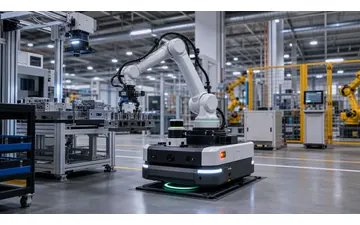
With the continuous development of smart manufacturing, smart logistics and special inspection scenarios, hybrid robots are gradually becoming core equipment in complex industrial environments because of their integrated multiple motion and operating capabilities. At the same time, the limitations of traditional wired charging methods in terms of reliability, safety and automation have become increasingly obvious, and wireless charging technology has begun to become an important supporting solution for hybrid robots. Characteristics and charging challenges of hybrid robots Compound robots usually integrate multiple functional forms, such as mobile chassis and robotic arms, inspection and operation units, and visual recognition

Application of explosion-proof robot wireless charging technology in high-risk industrial scenarios

Application of explosion-proof robot wireless charging technology in high-risk industrial scenarios

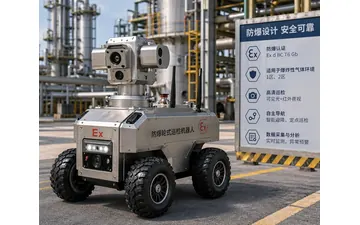
In high-risk industrial scenarios such as petrochemicals, coal mines, electric power, and gas, the equipment operating environment is usually flammable, explosive, high in dust, and high in humidity, which places extremely high requirements on the safety and reliability of inspection equipment. As an important carrier of intelligent inspection, explosion-proof robots’ power supply and charging methods are directly related to the safe operation of the overall system. The introduction of wireless charging technology provides a safer and more stable energy supply solution for explosion-proof robots. Explosion-proof robots have special requirements for charging methods. The traditional wired charging method relies on metal contacts.

Application analysis of wireless charging technology for explosion-proof robots

Application analysis of wireless charging technology for explosion-proof robots

In high-risk working environments such as petrochemical industry, coal mines, electric power, gas, and military industries, flammable and explosive gases, dust, and high temperature and high humidity conditions exist for a long time. Traditional manual inspection and wired power supply equipment have high security risks in such scenarios. As an intelligent alternative to explosion-proof robots, the safety of its power supply method is particularly critical. Therefore, wireless charging technology has gradually become an important part of explosion-proof robot systems. 1. Requirements for power supply systems in explosion-proof operating environments Explosion-proof robots are usually deployed in the following typical scenarios: Flammable and explosive gas or dust environments High

Why does the explosion-proof track inspection robot use wireless charging? ——Analysis of usage scenarios and technical value

Why does the explosion-proof track inspection robot use wireless charging? ——Analysis of usage scenarios and technical value

With the continuous improvement of industrial automation and intelligence levels, orbital inspection robots are increasingly widely used in fields such as electric power, chemical industry, mining, and rail transportation. Especially in hazardous environments such as flammable, explosive, humid, and high-voltage environments, the safety and reliability of inspection robots are particularly important. Wireless charging technology, as a "non-contact, plug-free" energy supply method, is becoming a key configuration of explosion-proof track inspection robots. This article will provide an in-depth analysis of the application of wireless charging in explosion-proof track patrols from three aspects: application reasons, typical scenarios and technical advantages.

Explosion-proof ground track-type intelligent inspection robot wireless charging: improving the safety of unattended operation and maintenance in explosive environments

Explosion-proof ground track-type intelligent inspection robot wireless charging: improving the safety of unattended operation and maintenance in explosive environments

The explosion-proof ground track-type intelligent inspection robot combined with wireless charging technology is a key operation and maintenance equipment in explosive environments such as petrochemicals, coal mines, and gas. It uses a dedicated ground track to achieve precise mobile inspections to avoid the impact of ground obstacles, and uses non-contact wireless charging to ensure long-term unattended operation and improve intrinsic safety levels. Application scenarios and demand background This type of robot is mainly deployed in explosive areas on the ground, such as petrochemical plant storage tank areas, oil pipeline corridors, gas stations and coal mine ground belt corridors. These places have high concentrations of dust, gas or combustible gases

Electric forklift wireless charging technology

Electric forklift wireless charging technology

Now the whole world is paying attention to the development of intelligence and unmanned operations. The transformation of the manufacturing and logistics transportation industries from automation to digitization, and then to intelligence and unmanned operations is the general trend. At the same time, the number of labor forces has decreased in recent years and the process of unmanned industry has accelerated. Unmanned forklifts occupy a very important position in the cargo handling and transportation process and will usher in huge development. The common charging method for traditional electric forklifts is to connect the battery cable to the plug of the electric forklift cable for charging. There are also some unmanned forklifts that use automatic charging, but they rely on naked

Analysis of wireless charging technology of magnetic wheeled intelligent inspection robot

Analysis of wireless charging technology of magnetic wheeled intelligent inspection robot

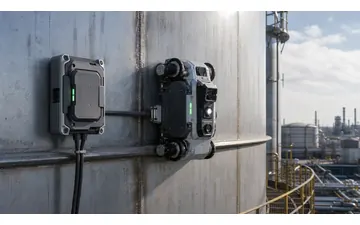
As industrial equipment continues to develop toward intelligence and unmanned operation, magnetic wheeled intelligent inspection robots are increasingly used in fields such as electric power, petrochemicals, steel structures, and rail transit. At the same time, the introduction of wireless charging technology is significantly improving the reliability and automation level of inspection robots. 1. What is a magnetic wheeled intelligent inspection robot? The magnetic wheeled intelligent inspection robot is a mobile inspection equipment using a magnetic wheel structure. By magnetically attaching to steel or ferromagnetic surfaces, the robot can move vertically, at an angle or even

Picking robots equipped with "wireless charging": the efficiency revolution of smart agriculture

Picking robots equipped with "wireless charging": the efficiency revolution of smart agriculture

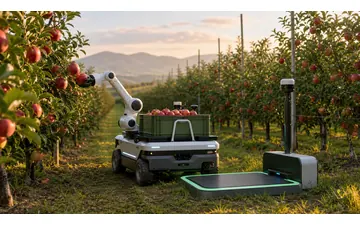
Picking robots equipped with "wireless charging": the efficiency revolution of smart agriculture In the landscape of modern agriculture, efficiency and intelligence have become new keywords. Apple picking robots, as representatives of smart agriculture, are gradually changing our orchards. But they still face a key challenge: How to get rid of the shackles of charging cables and achieve truly uninterrupted work? Now, the answer has emerged. When picking robots meet wireless charging, a revolution in efficiency is quietly taking place. Why do you need wireless charging? Traditional picking robots require

AGV definition and functional applications

AGV definition and functional applications

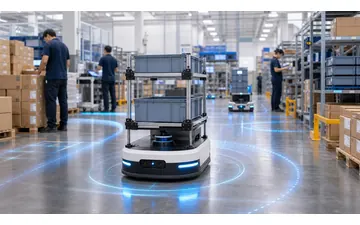
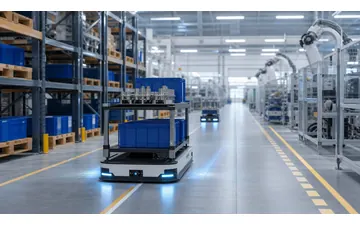
AGV is the abbreviation of Automated Guided Vehicle, which is "automatic guided transport vehicle". AGV is equipped with electromagnetic or optical automatic guidance devices and can travel along prescribed guidance paths. It is a transport vehicle with safety protection and various transfer functions. AGV functions and applications: Everyone is familiar with AGV. Its guidance methods are generally divided into three types: electromagnetic induction guidance, laser guidance, and gyro guidance (magnet). It can automatically complete tasks according to instructions under the supervision of an industrial computer. From the perspective of use, AGV

What are the safety requirements involved in agv charging?

What are the safety requirements involved in agv charging?

When fully grasping the process of AGV charging, people can know that this kind of charging is very high in terms of safety. Therefore, many people are very concerned about the actual charging content. However, when grasping the product charging safety content, many people do not understand many problems, so they hope to pay attention to it from more perspectives. When understanding the content of agv charging, people can know that mechanical safety requirements have become a very necessary part. When the specific content is grasped, the effect of product mechanical safety is very good. and in

AGV wireless charging mode features

AGV wireless charging mode features

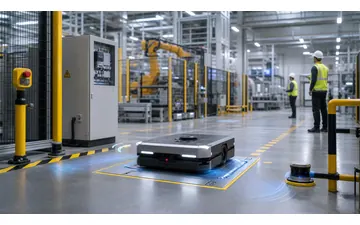
The GV wireless charging mode has the following characteristics: High safety * Electrical isolation: Wireless charging technology enables electrical isolation between the charging end and the AGV energy storage system, which fundamentally eliminates potential safety hazards caused by poor plug contact, plugging damage, etc. in the direct plug charging method, such as sparks, leakage, etc. It is especially suitable for harsh environments such as low-temperature condensation, moisture, flammability and explosion. * No exposed conductive contacts: The charging contacts are abandoned, and there are no exposed conductive contacts on the charger and electrical devices, further reducing safety risks such as electric shock and short circuit.

How to choose AGV, IGV, RGV and AMR?

How to choose AGV, IGV, RGV and AMR?

If the application scenario has high automation and unmanned requirements, then AMR and IGV are the first choices; if the application scenario is single and has certain requirements for the car's driving speed and operational stability, then RGV and AGV are worth considering. The above is a discussion of the differences between the four from the perspective of product function. However, when applying, in addition to considering the practicality of the function, the cost also needs to be controlled. The current price ranking of small cars on the market should be: RGV<AGV<IGV<AMR. However, in the long run, IGV and AMR will need to be used at a later stage.

Coal mine belt inspection and inspection robot wireless charging: creating an unmanned intelligent transportation inspection system

Coal mine belt inspection and inspection robot wireless charging: creating an unmanned intelligent transportation inspection system

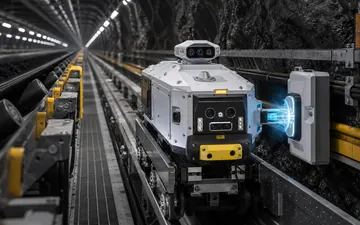
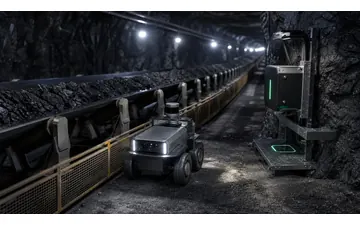
Coal mine belt inspection and inspection robots, combined with wireless charging technology, are becoming important equipment to ensure mine safety and improve the operation and maintenance efficiency of the conveyor system. It realizes long-term, unmanned online monitoring around coal mine underground belt conveyors (belt conveyors), and solves the safety and reliability issues of traditional charging methods in underground environments through wireless charging. Application Scenarios and Inspection Objects Coal mine belt inspection and inspection robots are mainly deployed in underground belt transportation lanes and ground coal transportation corridors to conduct real-time inspections of the transportation system. These areas are closed and dusty

Overview of wireless charging technology for indoor rail-mounted inspection robots

Overview of wireless charging technology for indoor rail-mounted inspection robots

Indoor rail-mounted inspection robots combined with wireless charging technology are becoming important intelligent equipment in unattended power distribution rooms, substations, petrochemical and other scenarios. It runs on a track fixed on the top or side wall of the room to achieve all-weather inspections, and relies on non-contact wireless charging to greatly improve battery life and safety. Concept and application scenarios Indoor rail-mounted inspection robots are intelligent inspection terminals that run along pre-laid tracks. They are usually deployed in relatively closed scenes such as power distribution rooms, switch rooms, energy storage stations, and petrochemical plants. Compared with wheeled robots, it does not occupy space

Wireless charging of sewage treatment plant inspection robots: improving the safety and intelligence of operation and maintenance

Wireless charging of sewage treatment plant inspection robots: improving the safety and intelligence of operation and maintenance

With the continuous advancement of smart water affairs and industrial automation, sewage treatment plant inspection robots are gradually replacing traditional manual inspections and undertaking important tasks such as equipment inspection, environmental monitoring and safety inspections. In a sewage treatment environment with high humidity, strong corrosion, and all-weather operation, wireless charging technology has become a key support to ensure the long-term stable operation of inspection robots. 1. Realistic challenges faced by sewage treatment plant inspections Sewage treatment plants have obvious industry characteristics, which put forward higher requirements for inspection equipment: The environment is humid, with a large amount of water vapor, sludge and corrosion.

Inspection robot dog wireless charging solution to help upgrade industrial intelligent inspection

Inspection robot dog wireless charging solution to help upgrade industrial intelligent inspection

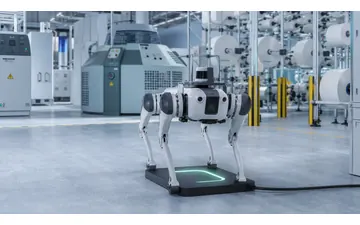
With the rapid development of artificial intelligence, robotics and the industrial Internet of Things, inspection robot dogs are gradually being used in complex scenarios such as electric power, petrochemicals, mines, tunnels, and park security. Compared with traditional wheeled or crawler inspection robots, robot dogs have stronger obstacle surmounting capabilities and environmental adaptability. The introduction of wireless charging technology has become a key infrastructure to promote long-term, stable and unattended operation of inspection robot dogs. 1. Application pain points of inspection robot dogs In practical applications, inspection robot dogs usually face the following problems: Complex working environment

Integrated development and application prospects of embodied robots and wireless charging technology

Integrated development and application prospects of embodied robots and wireless charging technology

1. What is an embodied robot? Embodied Robot refers to an intelligent robot system with integrated "perception-decision-execution" capabilities. It not only relies on cloud or remote control, but also realizes autonomous interaction in the physical world through body sensors, motion systems and edge computing units. Compared with traditional industrial robots, embodied robots have the following characteristics: Strong environmental perception capabilities (vision, lidar, force sense, etc.) Independent decision-making capabilities (AI model driven) High mobility and task adaptation

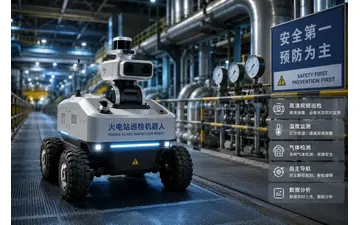
Research on the integration and application of thermal power station inspection robots and wireless charging technology

Research on the integration and application of thermal power station inspection robots and wireless charging technology

As the intelligent upgrade of the power industry accelerates, thermal power stations are facing higher requirements in terms of safety management, equipment operation and maintenance, and production efficiency. Traditional manual inspection methods are limited by environmental factors such as high temperature, high humidity, dust, and strong electromagnetic fields, and there are safety risks and hidden dangers of missed inspections. Therefore, thermal power station inspection robots with autonomous operation capabilities have gradually become an important part of the digital transformation of thermal power stations. At the same time, the introduction of wireless charging technology further improves the continuous operation capability of the robot system and provides high-reliability technical support for smart power plants. one

Wireless charging solution for unmanned cleaning ships: autonomous energy replenishment, efficient operation around the clock

Wireless charging solution for unmanned cleaning ships: autonomous energy replenishment, efficient operation around the clock

With the development of smart environmental protection and unmanned technology, unmanned cleaning boats are being widely used in water environments such as rivers, lakes, park landscape water systems, and reservoirs. Compared with traditional manually driven cleaning ships, unmanned cleaning ships can autonomously cruise, automatically avoid obstacles, and intelligently plan cleaning routes, greatly improving the efficiency of water surface garbage cleaning. However, unmanned operations bring new challenges - how to realize automatic energy replenishment and avoid frequent manual charging and maintenance. Charging Difficulties Faced by Unmanned Cleaning Vessels In practical applications, unmanned cleaning boats usually need to be continuously connected for a long time.

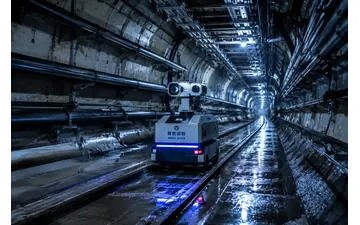
Application analysis of wireless charging technology for tunnel intelligent inspection robots

Application analysis of wireless charging technology for tunnel intelligent inspection robots

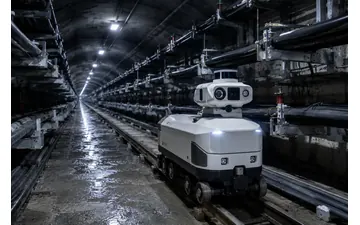
As the scale of urban infrastructure continues to expand, the complexity of operation and maintenance of power tunnels, comprehensive pipe corridors, subway tunnels and other scenarios continues to increase. Traditional manual inspection methods are no longer able to meet demand in terms of efficiency, safety and continuity. Tunnel intelligent inspection robots have gradually become the mainstream solution in the industry. Among them, the introduction of wireless charging technology has significantly improved the reliability and automation level of the inspection system. 1. Technical challenges in tunnel inspection scenarios Tunnel environments usually have the following characteristics: closed space, high humidity, presence of dust and corrosive gases, ground moisture

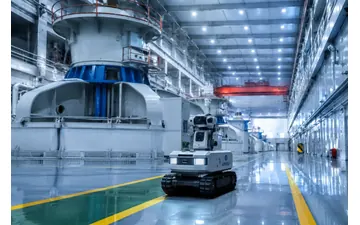
Application and development trends of hydropower station inspection robots combined with wireless charging technology

Application and development trends of hydropower station inspection robots combined with wireless charging technology

As the scale of hydropower stations continues to expand and the operating environment becomes increasingly complex, traditional manual inspections face problems such as high intensity, high risk, and limited coverage efficiency. As an important equipment for intelligent operation and maintenance, inspection robots have gradually become popular in scenarios such as hydropower station machine rooms, dams, and water delivery systems. The addition of wireless charging technology further improves the continuous operation capability of the robot system, making intelligent inspections more efficient and reliable. 1. Typical applications of inspection robots in hydropower stations 1. Unit equipment inspection Robots can regularly inspect power generation

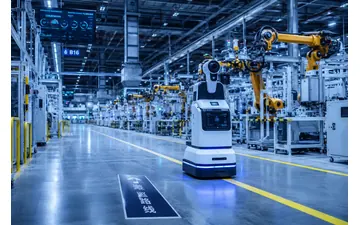
Combination application of factory workshop inspection robot and wireless charging technology

Combination application of factory workshop inspection robot and wireless charging technology

As intelligent manufacturing and industrial digitization continue to deepen, factory workshops are gradually moving towards an unmanned and intelligent production management model. Among them, inspection robots play an important role in equipment status monitoring, environmental safety inspections and production information collection. The introduction of wireless charging technology has brought higher operational continuity and automation levels to inspection robots, enabling them to truly implement long-cycle, unattended inspections. 1. Function and value of factory workshop inspection robot Factory workshop inspection robot is a type of robot that can move autonomously in the production environment.

Systematic integration research on power tunnel inspection robots and wireless charging technology

Systematic integration research on power tunnel inspection robots and wireless charging technology

As the scale of urban power grids continues to expand, the environment of power tunnels (cable tunnels, cable trenches) becomes increasingly complex. Traditional manual inspections have hidden dangers such as high humidity, high temperature, narrow space, and partial discharge risks, and the frequency of inspections cannot meet reliability requirements. Therefore, the deployment of power tunnel inspection robots has become an industry trend. However, inspection robots operate in closed tunnels for long periods of time, which places high demands on energy supply capabilities. With its contact-free and adaptable features, wireless charging technology provides an ideal way to replenish energy in tunnel scenarios. Power tunnel inspection robot

The integration of mining inspection robots and wireless charging technology: Promoting mine intelligence and safety upgrades

The integration of mining inspection robots and wireless charging technology: Promoting mine intelligence and safety upgrades

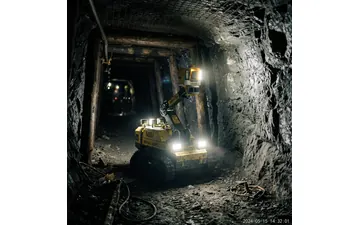
In recent years, the mining industry has been undergoing a rapid transformation from traditional manual inspections to intelligent and unmanned inspections. As an important carrier of this trend, mining inspection robots are gradually undertaking key tasks such as underground environmental inspections, equipment status detection, and safety hazard identification. As the complexity of work scenarios and the demand for continuous operations increase, the integration of wireless charging technology and mining inspection robots has become the focus of the industry. Mining inspection robots: an important part of mine intelligence Mining inspection robots are mainly used in complex underground environments such as coal mines and metal mines.

Explosion-proof wheeled inspection robot × wireless charging technology: creating a truly unattended industrial inspection system

Explosion-proof wheeled inspection robot × wireless charging technology: creating a truly unattended industrial inspection system

In flammable and explosive industrial scenarios such as petrochemicals, oil and gas storage and transportation, coal chemicals, energy storage power stations, and gas stations, safety inspections are an important part of ensuring production operations. As the risks and costs of manual inspections continue to increase, explosion-proof wheeled inspection robots have gradually become an important equipment for intelligent inspections of high-risk places. At the same time, the introduction of wireless charging technology allows robots to achieve truly continuous operation and unattended operation, improving industrial safety and operation and maintenance efficiency. 1. Definition and characteristics of explosion-proof wheeled inspection robots Explosion-proof wheeled inspection robots are specially designed for dangerous scenes

The Ministry of Emergency Management releases a new standard - wireless charging technology officially enters the explosion-proof inspection robot system

The Ministry of Emergency Management releases a new standard - wireless charging technology officially enters the explosion-proof inspection robot system

In August 2024, the Ministry of Emergency Management issued the "Safety Technical Requirements for Intelligent Inspection Robot Systems in Hazardous Explosive Workplaces (Draft for Comment)". This is China’s first national safety standard for robot systems in hazardous environments. The document clarifies for the first time that wireless charging is allowed, as long as it meets explosion-proof and electrical safety requirements. The introduction of this policy marks that wireless charging technology has been officially recognized at the national level and will become an important technical direction for intelligent inspections and unattended equipment in dangerous places. 1. National standards are included for the first time

China's livestock robot industry: Intelligent transformation is accelerating and the market prospects are broad

China's livestock robot industry: Intelligent transformation is accelerating and the market prospects are broad

In recent years, livestock robots, as intelligent equipment integrating cutting-edge technologies such as sensor technology, artificial intelligence, automated control systems, and the Internet of Things, are causing a revolutionary change in the field of livestock and poultry breeding. These high-tech "breeding assistants" not only cover all-round functions such as environmental monitoring, feeding management, milking operations, disease warning, cleaning and disinfection, and data collection, but also significantly improve breeding efficiency, reduce labor costs, and lead the livestock industry to transform into a precise and sustainable production model. Driven by both policy promotion and technological progress,

Application research on pig house patrol robots and wireless charging technology

Application research on pig house patrol robots and wireless charging technology

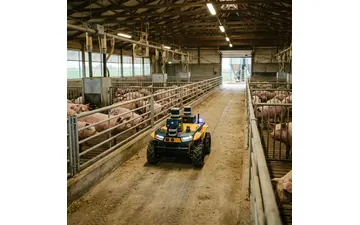
As modern pig farms accelerate their transformation from extensive management to large-scale and intelligent management, the value of automation equipment in breeding scenarios continues to increase. Pig house patrol robots are becoming key equipment in smart pig farms with their capabilities in inspection, health monitoring, manure detection and environmental collection. However, to maintain its high-frequency operation and all-weather response capabilities, reliable, efficient, and unmaintainable energy replenishment methods are crucial. Wireless charging technology has therefore become an ideal choice and has gradually become a standard feature of smart livestock equipment. 1. The main functions of the pig house patrol robot

Analysis on the integration of cattle and sheep breeding robots and wireless charging technology

Analysis on the integration of cattle and sheep breeding robots and wireless charging technology

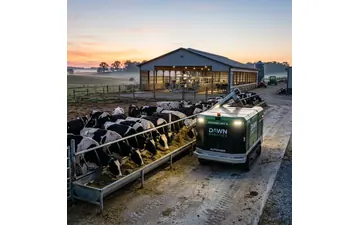
Against the backdrop of the increasing scale and intelligence of modern animal husbandry, cattle and sheep farms are gradually introducing automated and intelligent equipment to reduce labor costs and improve operational efficiency. As one of the representative equipment, cattle and sheep breeding robots usually perform key tasks such as feeding management, health monitoring, behavior recognition, manure cleaning, and environmental data collection. However, how to ensure the continuous energy supply of robots during long-term, high-frequency operations is a core issue that affects system reliability and efficiency. Wireless charging technology is becoming a key infrastructure to achieve "unmanned operation and maintenance".

Automated livestock systems improve traditional breeding models

Automated livestock systems improve traditional breeding models

Livestock robots refer to intelligent equipment used in the entire process of livestock and poultry breeding by integrating cutting-edge technologies such as sensor technology, artificial intelligence, automated control systems, and the Internet of Things. Its core functions cover environmental monitoring, feeding management, milking operations, disease warning, cleaning and disinfection, and data collection, aiming to improve breeding efficiency, reduce labor costs, and achieve precise and sustainable production. According to different work objects, livestock farming robots can be divided into poultry farming robots, such as automatic egg picking machines and hatching monitoring systems; livestock farming robots, such as intelligent milking machines, automatic

Smart cage wireless charging system: a revolutionary breakthrough in mine safety and efficiency

Smart cage wireless charging system: a revolutionary breakthrough in mine safety and efficiency

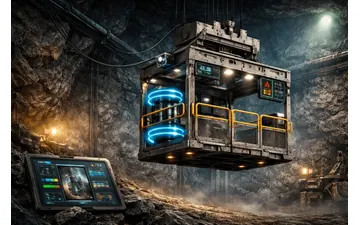
The core value of wireless charging system in smart cages \"The low-voltage power supply in the cage is powered by a safe energy storage battery and uses a high-power wireless charging device\" This design is the key solution to solve the pain points of power supply in mine cages. According to the latest industry practices, the wireless charging system can perfectly solve the three major pain points of traditional cage power supply: Safety pain point: Traditional wired charging can easily generate sparks in underground high-humidity and dusty environments, violating mining explosion-proof standards. Efficiency pain point: Manual plug-in charging leads to long cage downtime, affecting the production rhythm. Maintenance pain point

Smart breeding inspection robot: new changes in charging methods in the livestock industry

Smart breeding inspection robot: new changes in charging methods in the livestock industry

In the field of modern livestock breeding, smart breeding inspection robots are gradually becoming an indispensable and important role. Traditional breeding inspections rely on manual labor, which not only consumes a lot of manpower and time, but also has disadvantages such as insufficient monitoring accuracy and difficulty in fully grasping information in real time. The emergence of smart breeding inspection robots has completely changed this situation. It has a flexible body shape and is equipped with an advanced sensor system, as if it has sharp "five senses". The visual sensor can accurately identify the appearance and behavioral status of livestock and poultry, the infrared sensor can sense whether their body temperature is normal, and the gas sensor can

Overview and wireless charging of outdoor wheeled inspection robot

Overview and wireless charging of outdoor wheeled inspection robot

The outdoor wheeled inspection robot is an intelligent mobile device specially designed for complex outdoor environments. It is widely used in power inspection, petrochemical parks, photovoltaic power plants, ports and terminals, urban security and other scenarios. It is based on a wheeled chassis and is equipped with a variety of sensors, camera equipment and autonomous navigation systems to achieve remote control or fully automatic inspections. Main features: High mobility: The wheeled structure has strong road adaptability and can drive smoothly on asphalt pavements, concrete, gravel roads and other venues. Intelligent perception capabilities equipped with high-definition cameras, infrared thermal imaging cameras, lasers

AGV charging technology technical analysis and application research

AGV charging technology technical analysis and application research

1. Overview of AGV charging technology As the core equipment in modern logistics and intelligent manufacturing fields, automated guided vehicles (AGVs) directly affect the operating efficiency, reliability and economy of the system in terms of energy supply. With the further advancement of Industry 4.0 and smart manufacturing, AGV charging technology is undergoing major changes from traditional contact to wireless charging, and from offline charging to online charging. The core goal of AGV charging technology is to ensure the safety and reliability of charging.