
Wireless Charging for Magnetic-wheel Inspection Robots
As industrial equipment becomes more intelligent and automated, magnetic-wheel inspection robots are increasingly used in power, petrochemical, steel structure, rail transit and other fields. At the same time, wireless charging technology is improving the reliability and automation level of inspection robots.
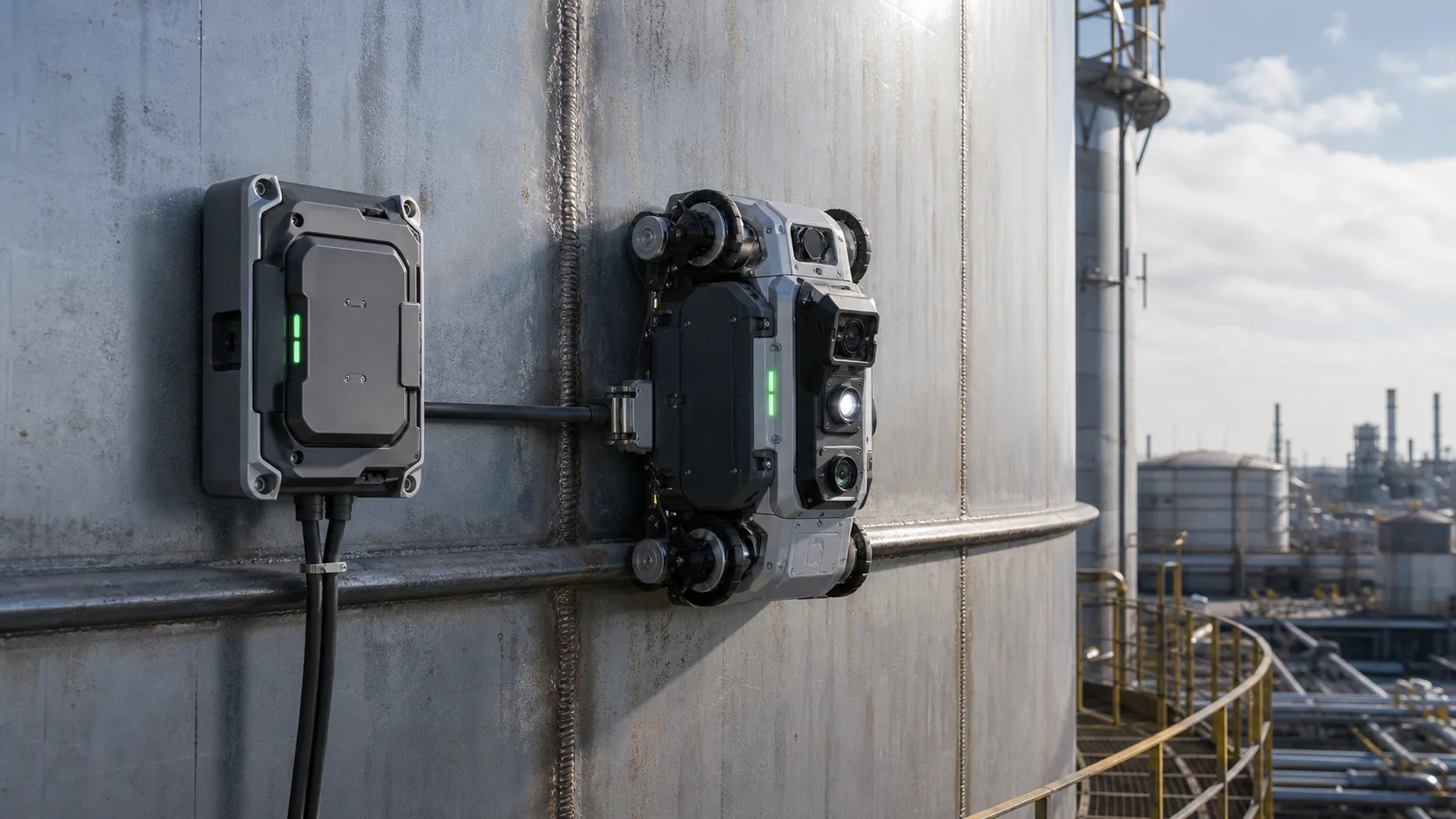
1. What is a magnetic wheeled intelligent inspection robot?
A magnetic-wheel inspection robot uses magnetic adhesion to travel on suitable ferromagnetic surfaces. Depending on its design and the surface condition, it may inspect inclined, vertical or overhead structures. Adhesion capacity must be checked for the payload, curvature, coatings, contamination and any gaps in the surface.
Its typical application scenarios include:
- Exterior surfaces of steel structure workshops and large equipment
- Inspection of storage tanks and pressure vessels
- Electric power facilities and substation metal structures
- Industrial pipe gallery and tunnel inner wall
2. The core advantages of the magnetic wheel structure
Compared with traditional wheeled or tracked inspection robots, the magnetic wheeled structure has obvious advantages:
- Strong adhesion and stable operation
Magnetic wheels provide adhesion; safe operation still requires a verified holding margin and any fall-protection measures needed for the installation. - Adapt to complex spatial structures
It can move flexibly in narrow spaces, curved surfaces or multi-angle steel structure surfaces. - Reduce the risk of manual inspection
It replaces manual work in high-risk, closed or toxic environments and improves safety.
3. The role of wireless charging in inspection robots
In traditional solutions, inspection robots usually rely on wired charging or metal contact charging methods, which have problems such as contact wear, water corrosion, and spark hazards. wireless charging technology provides a new solution for magnetic-wheel inspection robots.
1. Contactless charging is safer
A contactless charging interface avoids mating electrical contacts and their associated wear. Enclosure protection and hazardous-area suitability must still be established for the complete equipment; wireless transfer alone is not an explosion-protection approval.
2. Automatic docking to improve the degree of unattended operation
The robot can automatically return to the charging area after the inspection to achieve accurate charging and reduce manual intervention.
3. Adapt to harsh industrial environment
The charger must be designed and tested for the actual dust, moisture, oil exposure and temperature. Inspect pads, mounting and cabling as part of routine maintenance.
4. The application value of magnetic wheeled inspection robot + wireless charging
Combining the magnetic wheel structure with wireless charging technology can significantly improve the overall performance of the inspection system:
- Operating availability: Coordinate charging and inspection tasks to support the required shift pattern.
- Lower maintenance costs: Reduce charging interface loss and failure rate
- Higher system reliability: Adapt to complex environments such as high temperature, high humidity, and high dust
- Improved level of intelligence: Easier to integrate with dispatching systems and digital twin platforms
5. Future development trends
As industrial robots and wireless power transmission technology continue to mature, Wireless charging for magnetic-wheel inspection robots will develop in the following directions:
- Higher power wireless charging capabilities
- More accurate automatic alignment and charging management
- Deeply integrated with AI inspection algorithm
- Customized applications for multiple industries
It is foreseeable that this technology combination will play an increasingly important role in the fields of intelligent manufacturing, energy inspection and smart factories.