
High-protection Outdoor Inspection Robots and Wireless Charging
definition
High protection outdoor inspection robot is an industrial inspection robot specially designed for harsh environments and high-risk places. It has High protection level(usually IP65 and above) and the ability to adapt to various extreme weather conditions (such as rain, snow, sand, high temperature, low temperature, etc.). It is usually used to perform tasks such as equipment inspection, fault diagnosis, and data collection in outdoor or open-air environments. Its scope of application includes high-risk or inaccessible areas such as power facilities, oil and gas pipelines, mines, and wind power stations.
High protection refers to the waterproof, dustproof, corrosion-resistant and earthquake-resistant properties of the robot shell, ensuring that the robot can work stably in environments such as heavy rain, dust, strong wind and low temperatures.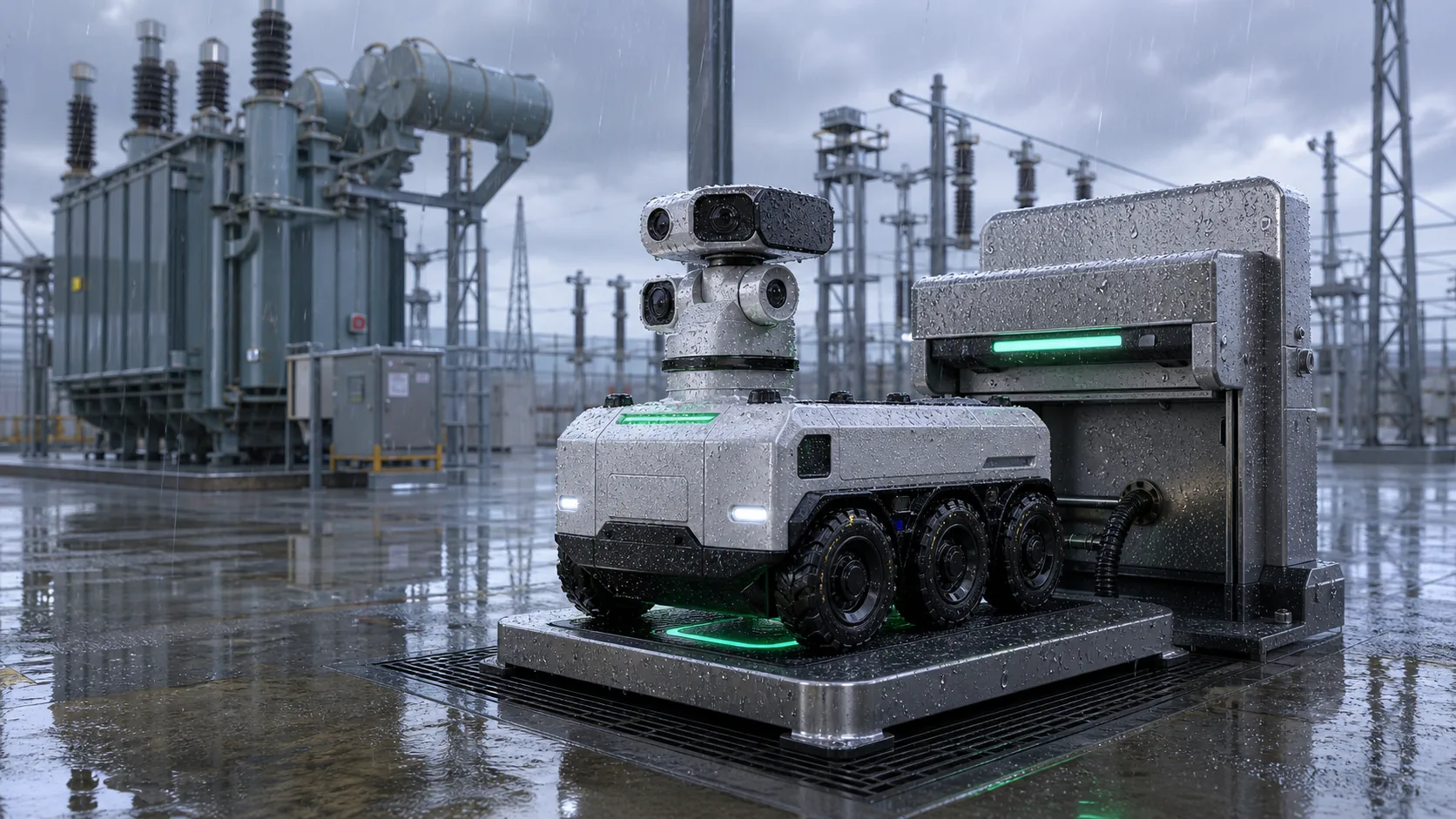
Main features:
- High protection level: Usually complies with international standards such as IP65 and IP67 to ensure that the robot can withstand external environmental influences such as dust, water immersion, moisture, and salt spray.
- High adaptability: Able to perform tasks in extreme temperatures, humidity, wind speeds and other harsh conditions.
- Strong durability: It has functions such as impact resistance, earthquake resistance, and corrosion resistance, and can operate stably for a long time in complex environments.
- Automated inspection: By integrating sensors, high-definition cameras, lidar and other equipment, it can automatically perform equipment inspection, environmental monitoring and data collection.
Will wireless charging be used?
Yes, high-protection outdoor inspection robots are very suitable for using wireless charging technology, mainly has the following advantages:
1. Avoid harsh environmental impacts
The wireless charging system transmits energy through electromagnetic waves, which avoids the physical contact problem in traditional charging methods. This means that the robot does not need to frequently contact the charging interface or cable, avoiding wear, corrosion or damage of the interface in a high-protection environment.
In high-protection environments, traditional charging interfaces are often easily affected by water, dust, chemicals, etc., which may lead to unstable charging or short circuits and other problems. Wireless charging technology provides a more stable charging solution that is less susceptible to interference from external factors.
2. Improve work efficiency
In harsh outdoor environments, robots often perform tasks for long periods of time, especially in locations without easy access to charging points. Wireless charging technology allows the robot to automatically dock and charge during the inspection process without stopping work, thus achieving Charging while inspecting, improve work efficiency and ensure uninterrupted tasks.
3. Improve safety
In many high-protection outdoor environments (such as wind farms, power stations, oil and gas facilities, etc.), the robot working area may have dangerous factors such as high temperature, humidity, or explosive gases. Wireless charging technology avoids wired cable connections and physical interface exposure, reducing safety hazards caused by electrical contact, sparks and arcs, and is especially suitable for high-risk environments.
4. Reduce maintenance requirements
Wireless charging reduces wear and tear on the robot's physical interface, reducing maintenance frequency and costs. High-protection outdoor inspection robots often need to work for a long time, and the traditional charging interface may be damaged by weather, dust, chemical corrosion and other factors. Wireless charging does not require contact connection, which reduces the impact of external factors on the charging system and extends the service life of the device.
5. Flexible to adapt to complex terrain
High-protection outdoor inspection robots often operate in complex and changeable terrains, such as oil and gas pipelines, wind power stations or mining areas. These environments may be difficult to set up traditional charging piles or charging stations. Wireless charging can allow the robot to easily charge during inspections and adapt to the needs of different terrains and environments by setting up wireless charging stations or charging areas.
6. Reduce manual intervention
An important advantage of wireless charging is automation.The robot does not require manual cable plugging during charging, reducing operational complexity and especially lowering the risk and difficulty of manual intervention in windy or rainy environments.
Wireless charging for high-protection outdoor inspection robots supports continuous, efficient and safe inspection tasks in harsh environments. Wireless charging can improve robot operating efficiency, but also ensure safe operation in harsh environments and reduce safety hazards and maintenance problems caused by traditional charging methods. With the continuous development of wireless charging technology, it will become one of the important energy solutions for outdoor high-protection inspection robots.