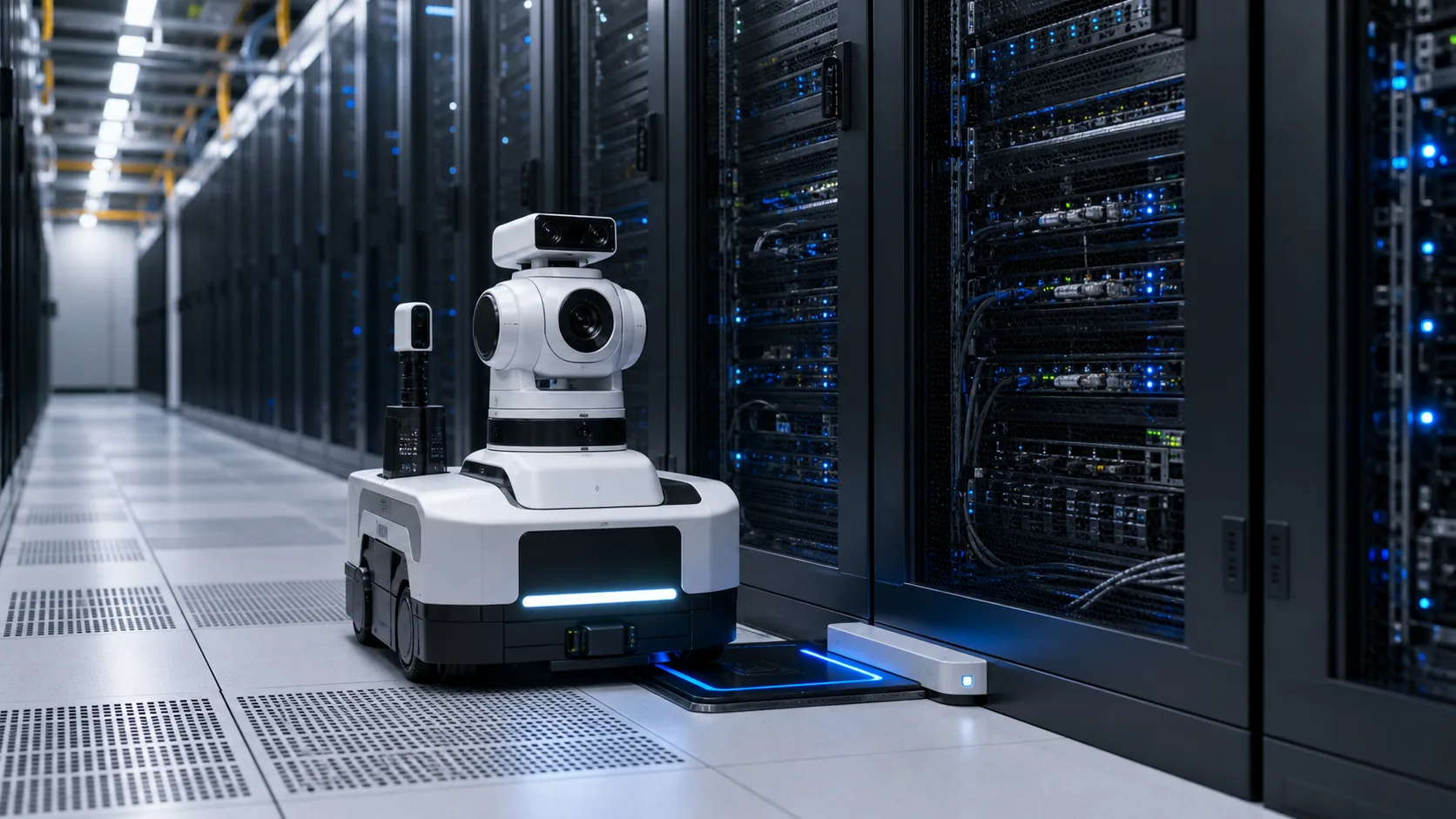
Wireless Charging Needs for Data Center Inspection Robots
Data center inspection robots can record equipment status, temperature, humidity and alarms along planned routes. Their charging schedule must fit the inspection workload: a robot that is recharging is not simultaneously covering every inspection point.
Charging challenges
- Battery capacity: Route length, payload and inspection time determine how often the robot must recharge.
- Availability: Charging trips, queues and recovery from failed docking affect coverage.
- Contact maintenance: Wear, contamination or poor engagement can interrupt contact charging.
What wireless charging changes
A wireless station transfers energy to a compatible receiver without mating electrical contacts. The robot still needs to dock within a specified gap and alignment window. Integrating a station at an existing waiting point can make better use of planned stops and reduce manual cable handling.
This does not provide unrestricted charging anywhere in the data center or guarantee 24-hour uninterrupted inspection. Charging while moving requires a separate dynamic system. Around-the-clock coverage may instead depend on scheduling several robots or allowing charging between routes.
Automatic stations and energy management
The vehicle controller or fleet scheduler can trigger a return when state of charge reaches a threshold. Docking confirmation, BMS permission and charger checks should precede power transfer. Charging status, battery temperature and faults should be available to the inspection platform so it can resume or reassign tasks.
Some robots may support both wired and wireless charging, but automatic switching is not a universal feature. It requires compatible hardware, coordinated controls and safe interlocks. Neither method is inherently faster: compare the actual battery limits and charger ratings.
Integration priorities
- Plan station locations around access aisles, equipment clearances and escape routes.
- Check the battery profile, charge power and available dwell time.
- Validate gap, offset, docking recovery and communication loss behavior.
- Assess thermal performance and electromagnetic compatibility with nearby equipment.
- Coordinate charging capacity, inspection priorities and maintenance access across the fleet.
Wireless charging can improve an inspection workflow when it addresses a measured docking or maintenance problem. Evaluate coverage, energy consumption, successful charging events and recovery time in the actual data center rather than relying on a general promise of continuous operation.