
Wireless Charging for Smart Farming Inspection Robots
In the field of modern livestock breeding, smart livestock farming inspection robots are gradually becoming an indispensable and important role.
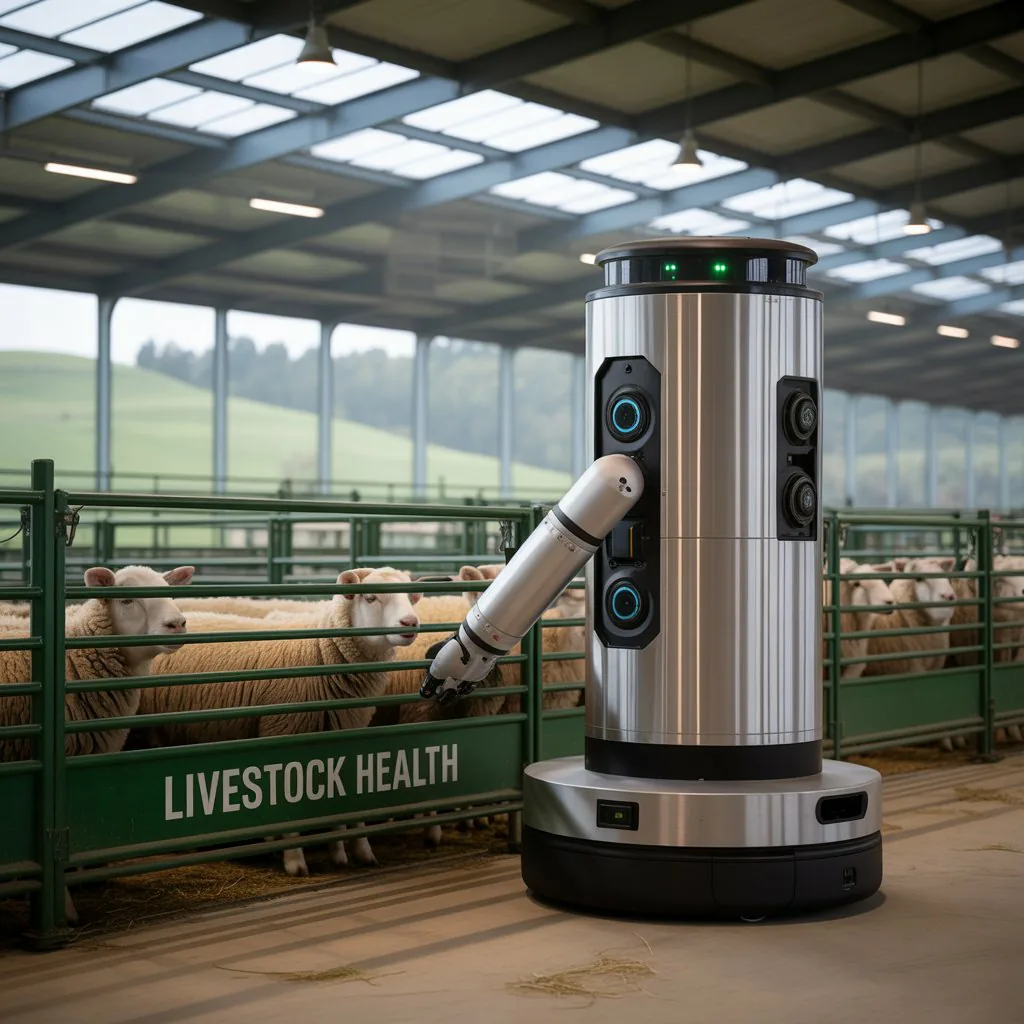
Traditional breeding inspections rely on manual labor, which not only consumes a lot of manpower and time, but also has disadvantages such as insufficient monitoring accuracy and difficulty in fully grasping information in real time. The emergence of smart livestock farming inspection robots has completely changed this situation. It has a flexible body shape and is equipped with an advanced sensor system, as if it has sharp "five senses". The visual sensor can accurately identify the appearance and behavioral status of livestock and poultry, the infrared sensor can sense whether their body temperature is normal, and the gas sensor is responsible for monitoring the concentration of harmful gases such as ammonia and hydrogen sulfide in the breeding environment.
In the breeding farm, the inspection robot shuttles through various breeding areas at regular intervals and at fixed points according to preset routes. It can work 24 hours a day and upload the collected data to the cloud platform in real time. Farmers can check the growth status, environmental parameters and other information of livestock and poultry anytime and anywhere through their mobile phones or computers. Once there is an abnormality in a certain data, such as the body temperature of a certain livestock or poultry is too high, or the ammonia concentration exceeds the standard, the system will immediately issue an alarm, and the farmers can quickly take corresponding measures to avoid the expansion of losses.
With the continuous advancement of technology, many smart livestock farming inspection robots also have wireless charging capabilities, which brings many benefits to their applications. Wireless charging technology eliminates the need for the robot to frequently plug and unplug the charging cable during the charging process, avoiding the problem of damage to the charging interface caused by excessive plugging/unplugging, reducing maintenance costs and improving the reliability and stability of the robot. Moreover, the wireless charging device can be designed to be more flexible and concealed, and can be better integrated with the overall layout of the farm environment without affecting the aesthetics and daily operating procedures of the farm. At the same time, the robot can automatically connect to wireless charging equipment to achieve efficient and convenient charging management, ensuring that the robot is fully charged at all times, ensuring the continuity of its inspection work, and further improving the intelligent level of livestock breeding.
The smart livestock farming inspection robot also has the ability to learn. As the time of use increases, it will become more accurate in judging the normal and abnormal behaviors of livestock and poultry, providing a more reliable basis for breeding decisions. Its application not only improves breeding efficiency and reduces labor costs, but also ensures the healthy growth of livestock and poultry, promotes the livestock industry to make strides in the direction of intelligence and refinement, and becomes a bright new star in the field of agricultural science and technology, illuminating the road to modernization of livestock breeding.