
Wireless Charging Technology for Explosion-proof Robots
In high-risk working environments such as petrochemical industry, coal mines, electric power, gas, and military industries, flammable and explosive gases, dust, and high temperature and high humidity conditions exist for a long time. Traditional manual inspection and wired power supply equipment have high security risks in such scenarios. As an intelligent alternative to explosion-proof robots, the safety of its power supply method is particularly critical. Therefore, wireless charging technology has gradually become an important part of explosion-proof robot systems.
1. Requirements for power supply systems in explosion-proof operating environments
Explosion-proof robots are usually deployed in the following typical scenarios:
- Flammable and explosive gas or dust environment
- Industrial areas with high humidity and corrosive gases
- Dangerous areas with long continuous operation time and difficult manual access frequently
In the above environment, the power supply system must meet the comprehensive requirements of spark protection, short circuit protection, corrosion protection and high reliability.
2. The core advantages of wireless charging in explosion-proof robots
Compared with traditional plug-in wired charging methods, wireless charging has obvious technical advantages in explosion-proof robot applications:
- Avoid the risk of sparks
Wireless charging uses a non-contact energy transmission method, which can effectively eliminate the hidden dangers of arcs or sparks during the plugging/unplugging process. - Structural sealing is higher
Explosion-proof robots can achieve a fully enclosed structure design, reducing the number of interfaces, which is beneficial to improving the overall explosion-proof level and protection level. - Adapt to operating in harsh environments
The wireless charging system is insensitive to dust, water vapor, and oil pollution, and is suitable for long-term deployment in complex industrial environments. - Support unattended operations
The robot can automatically return to the charging area when the battery is low, enabling unattended operation throughout the entire process.
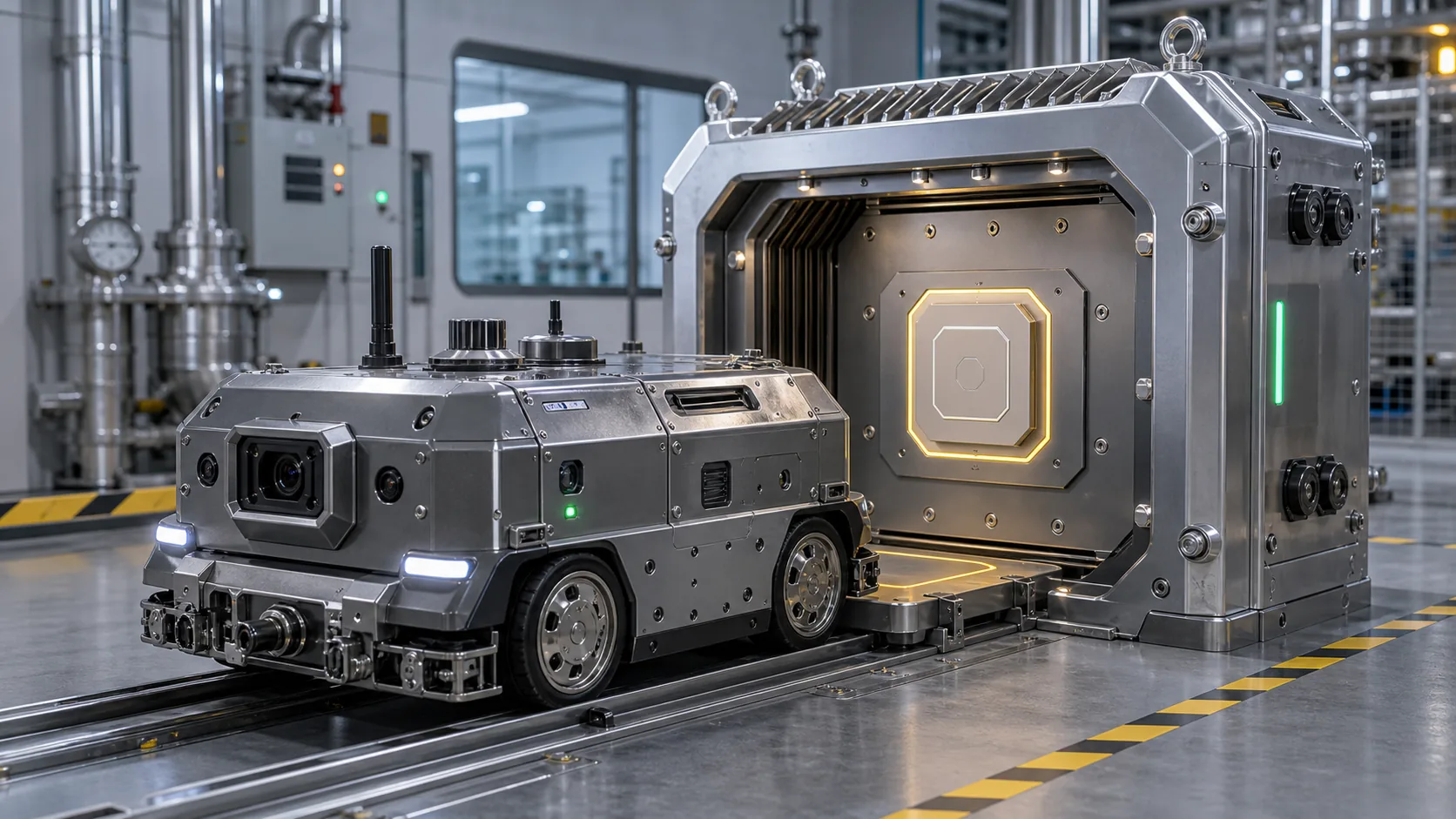
3. Composition of explosion-proof robot wireless charging system
A typical explosion-proof robot wireless charging system mainly includes:
- Explosion-proof wireless charging transmitter
- Robot internal wireless energy receiving module
- Explosion-proof power management and charging control unit
- Position recognition and alignment assistance system
During the charging process, energy is transmitted through magnetic coupling or electromagnetic coupling, and the system has over-temperature, over-current and abnormal state protection mechanisms.
4. Increased value of explosion-proof inspection and operation and maintenance
Wireless charging technology gives explosion-proof robots higher engineering value in practical applications:
- Improve operational safety level, reduce the risk of explosion accidents
- Improve equipment online rate, reduce downtime due to maintenance
- Reduce the frequency of manual intervention, improve personnel safety conditions
- Enhance system stability, suitable for long-term continuous operation
5. Technology development trends
With the continuous improvement of the explosion-proof standard system and wireless power transmission technology, explosion-proof robot wireless charging is developing in the following directions:
- Secure wireless transmission at higher power levels
- Larger alignment tolerance improves automatic parking success rate
- Deeply integrated with the intelligent dispatching system to achieve centralized management
In the future, explosion-proof robot wireless charging technology will be applied on a large scale in more high-risk industrial fields.
The combination of explosion-proof robots and wireless charging technology provides a safer and more reliable technical path for intelligent inspection and operations in high-risk environments. This technology not only optimizes the power supply method, but also lays an important foundation for the intelligent and unattended operation of industrial systems.