
Wireless Charging for Intelligent Shaft Inspection Robots
In the intelligent construction of coal mines, the inspection of vertical shafts is gradually shifting from manual regular inspection to robot online inspection. In the "Compilation of Typical Cases of National Coal Mine Intelligent Construction (2023)" released by the National Energy Administration, Case 59 mentioned that intelligent shaft inspection robots can be used to monitor the status of vertical shaft equipment, including abnormal conditions such as tank channel deviation, shaft guide component wear, mechanical noise, overloading, and tail rope status. For this type of long-term inspection equipment, wireless charging is not an additional function, but an important foundation to ensure that the robot remains online.
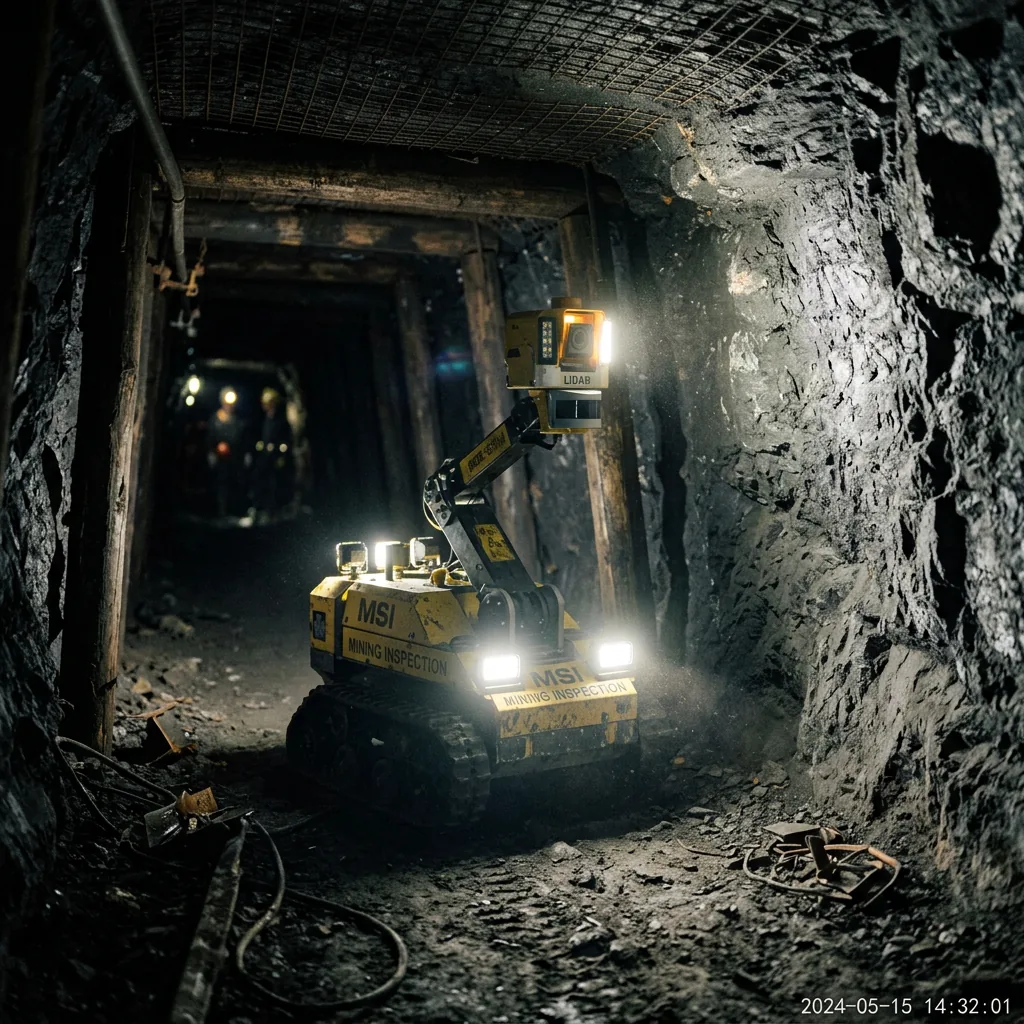
1. Typical tasks of wellbore inspection robots
The vertical shaft has a narrow space, humid environment, frequent equipment operation, high intensity of manual inspection, and high risks. The intelligent wellbore inspection robot can run along the wellbore hoisting system and collect video, audio and sensors on key components to help operation and maintenance personnel discover hidden dangers in time.
- Video inspection: Identify abnormal conditions such as tank channels, tank lugs, fixing bolts, wellbore components, etc.;
- Audio inspection: Collect abnormal sounds such as mechanical noises and pipeline leaks and trigger alarms;
- Tension and load monitoring: Assist in judging lifting load, mine skip sticking, secondary loading and overloading risks;
- Environmental monitoring: Simultaneously pay attention to issues such as temperature abnormalities, cable drops, loose structures, etc.;
- Remote alarm: Upload images, sounds, and data to ground workstations or mining platforms.
2. Why does wellbore inspection require wireless charging?
The operating environment of wellbore inspection robots is different from that of ordinary ground robots. It needs to work in an environment with vertical shafts, high humidity and dust, strong vibration and dense metal structures. Manual plugging/unplugging for charging are inconvenient, and exposed contacts are also susceptible to water vapor, dust and wear.
Wireless charging transmits electric energy in a non-contact manner, and the robot can automatically recharge after it reaches the designated docking point. For wellbore inspection robots, this method mainly solves three types of problems:
- Reduce manual intervention: The inspection robot can be automatically charged at the wellhead or fixed docking point, reducing the frequency of personnel entering high-risk areas.
- Reduce contact failures: No plugs, shrapnel and exposed electrodes to avoid contact wear, oxidation, water ingress and poor contact.
- Improve continuous operating capability: Replenish energy according to inspection shifts or docking beats to keep the video, audio and tension monitoring modules online stably.
3. Application methods of wellhead wireless charging
In engineering applications, wellbore inspection robots usually do not need to be charged while running, but can automatically recharge at the wellhead, bottom or fixed maintenance points. The transmitter is installed in the docking position, and the receiver is installed on the robot or accompanying power module. After the robot returns to the docking position, the system confirms the position, establishes communication, starts charging, and uploads the charging status to the monitoring platform.
| link | Design focus | Wireless charging value |
| dock positioning | Wellbore vibration, guidance error, and limited installation space | Allow a certain offset distance to reduce the difficulty of docking |
| Charging start | Need to confirm that the robot is in place and the battery status is | Supports communication handshake and controlled startup |
| Environmental protection | Moisture, dust, and metal structures | IP65/IP67 sealing protection available |
| Operation and maintenance | Wear of contact parts will increase the amount of inspection and maintenance | No mechanical contacts, reducing daily maintenance stress |
| Platform linkage | Need to upload power, temperature, fault status | Can access the system through RS485, CAN and other interfaces |
4. Collaboration of wireless charging and intelligent inspection system
Intelligent wellbore inspection robots rely on cameras, fill lights, pickups, sensors, communication modules and edge analysis units. If the power supply is unstable, image recognition, abnormal noise analysis and alarm closed loop will be affected. The wireless charging system can also incorporate the "charging status" into the inspection platform management, allowing operation and maintenance personnel to see the robot task status and power status at the same time.
- Automatically return to the station or prompt for maintenance when the battery is low;
- Upload an alarm when charging is abnormal to avoid robot inspections with diseases;
- Adjust charging power according to inspection frequency, docking time and battery capacity;
- Form unified operation and maintenance data with video analysis, audio analysis, tension monitoring and other modules.
5. What parameters should you pay attention to when selecting a model?
The wireless charging solution for wellbore inspection robots should be selected based on the actual inspection rhythm, and should not only look at the rated power. What is more important is the number of robot inspections per day, single docking time, sensor power consumption, battery capacity, installation distance and protection requirements.
- Power level: Select the appropriate power according to the power consumption of camera, fill light, communication and drive system;
- working distance: The wellhead installation space is limited, so the vertical distance and horizontal offset range should be confirmed;
- Protection level: For wellbore environment, it is recommended to give priority to high-protection shells and sealed structures;
- Communication interface: Easy to link with robot controller, BMS and mining platform;
- Security protection: Over-temperature, over-current, over-voltage, foreign object detection and charging status indication should be provided.
Conclusion
The core goal of the intelligent wellbore inspection robot is to replace high-risk, high-intensity manual inspections with stable data collection. Wireless charging solves the problem of charging during continuous operation of the robot, allowing the robot to automatically return to a fixed position to recharge after completing inspection tasks such as tank channels, shaft guide components, abnormal noises, overloading, and tail ropes, and continue to the next round of inspections. For coal mine shaft hoisting systems, this type of non-contact charging solution can help reduce maintenance, increase the frequency of inspections, and lay the foundation for unattended inspections.
References: National Energy Administration "Compilation of Typical Cases of National Coal Mine Intelligent Construction (2023)".