
Wireless Charging for Indoor Rail-mounted Inspection Robots
Indoor rail-mounted inspection robots combined with wireless charging technology are becoming important intelligent equipment in unattended power distribution rooms, substations, petrochemical and other scenarios. It runs on a track fixed on the top or side wall of the room to achieve all-weather inspections, and relies on non-contact wireless charging to greatly improve battery life and safety.
Concepts and application scenarios
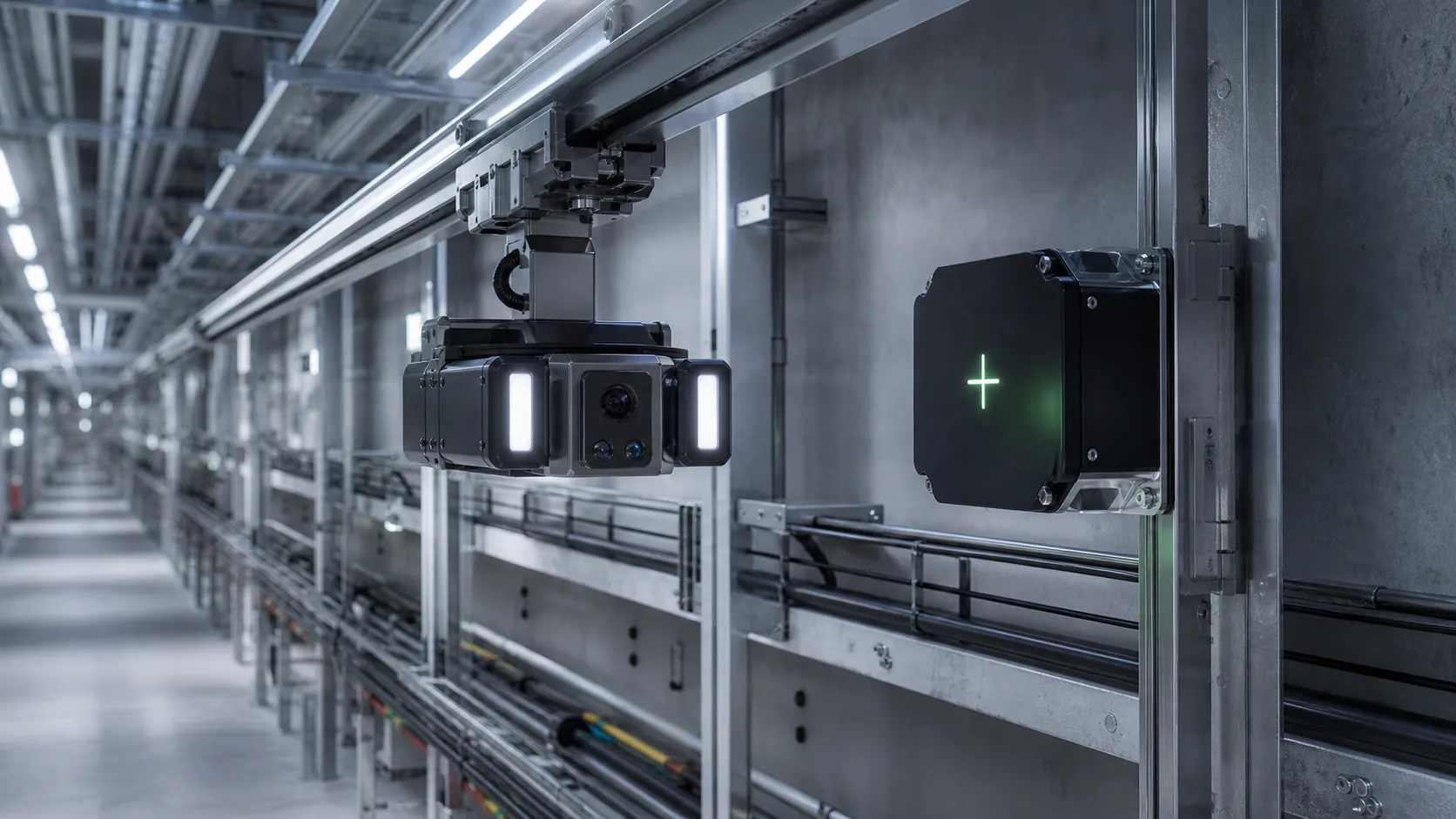
The indoor rail-mounted inspection robot runs along pre-laid tracks. As intelligent inspection terminals, these robots are usually deployed in relatively closed scenes such as power distribution rooms, switchgear rooms, energy storage stations, and petrochemical plants. Compared with wheeled robots, it does not occupy ground passages and is not affected by environmental obstacles such as ground obstacles, water, and oil pollution. The route is controllable and the risk is lower.
Typical applications include:
- Inspection of instrument readings, indicator light status, equipment temperature rise and partial discharge in distribution rooms and substations.
- Explosion-proof environment monitoring and equipment status inspection in flammable and explosive places such as petrochemical and coal chemical industries.
- Temperature, smoke, toxic gas and insulation abnormality monitoring in energy storage power stations and battery rooms.
Core functions and system components
Rail-mounted inspection robots generally consist of a track system, a body platform, a sensing unit, a communication and control system, and a charging system. Tracks can be arranged in a circular, straight and branched or "mouth" shape to cover all critical equipment areas.
Key features include:
- Visual and infrared inspection: Identify instrument pointers, digital meters, indicator lights, switch positions and heating points through visible light and infrared thermal imaging.
- Environment and safety monitoring: multi-dimensional monitoring of temperature and humidity, smoke, flammable and toxic gases, liquid leakage, etc. to achieve abnormal early warning.
- Autonomous task execution: scheduled operation according to preset inspection routes, supporting remote temporary dispatch, voice intercom, alarm linkage and other functions.
Wireless charging technology solution
Wireless charging usually uses inductive charging devices arranged at the track end or at specific sites to achieve non-contact energy transmission through coil coupling. Some solutions combine large-capacity lithium batteries to enable the robot's cruising range to reach several kilometers, and the maximum charging time to be controlled within a few hours.
In explosion-proof and high-risk scenarios, the non-contact and spark-free characteristics of wireless charging stations are particularly important, which can effectively reduce the risk of sparks from plug-in interfaces. At the same time, wireless charging requires relatively low alignment accuracy and allows a certain position error, which is suitable for situations where there is a slight deviation in the parking of the rail-mounted robot.
Technical advantages and challenges
Compared with traditional manual inspections, the rail-mounted inspection robot can achieve continuous operation 24/7, significantly improving the frequency of inspections and the continuity and traceability of data. Combining AI vision and big data analysis, trend judgments and hidden danger predictions on equipment status can be made to reduce the risk of sudden failures and power outages.
Although wireless charging brings the advantages of high reliability and maintenance-free, it still faces challenges in charging efficiency, transmission distance and system cost. For complex environments, it is necessary to continue to optimize electromagnetic compatibility, explosion-proof certification, rational track layout and system redundancy design.
Development trends and application prospects
With the advancement of unattended and intelligent operation and maintenance in the power, petrochemical, new energy and other industries, the demand for rail-mounted inspection robots in indoor scenes is maintaining rapid growth, and the market size is expected to continue to expand in the next few years. The integration of technologies such as the Internet of Things, cloud platforms and large models will enable inspection robots to evolve from data collection terminals to edge intelligent nodes with analytical and decision-making capabilities.
Typical future trends include:
- Deeply integrated with 5G/industrial Internet to achieve lower latency remote control and massive data backhaul.
- Interface with digital twins and equipment health management systems to achieve intelligent operation and maintenance of the entire asset life cycle.