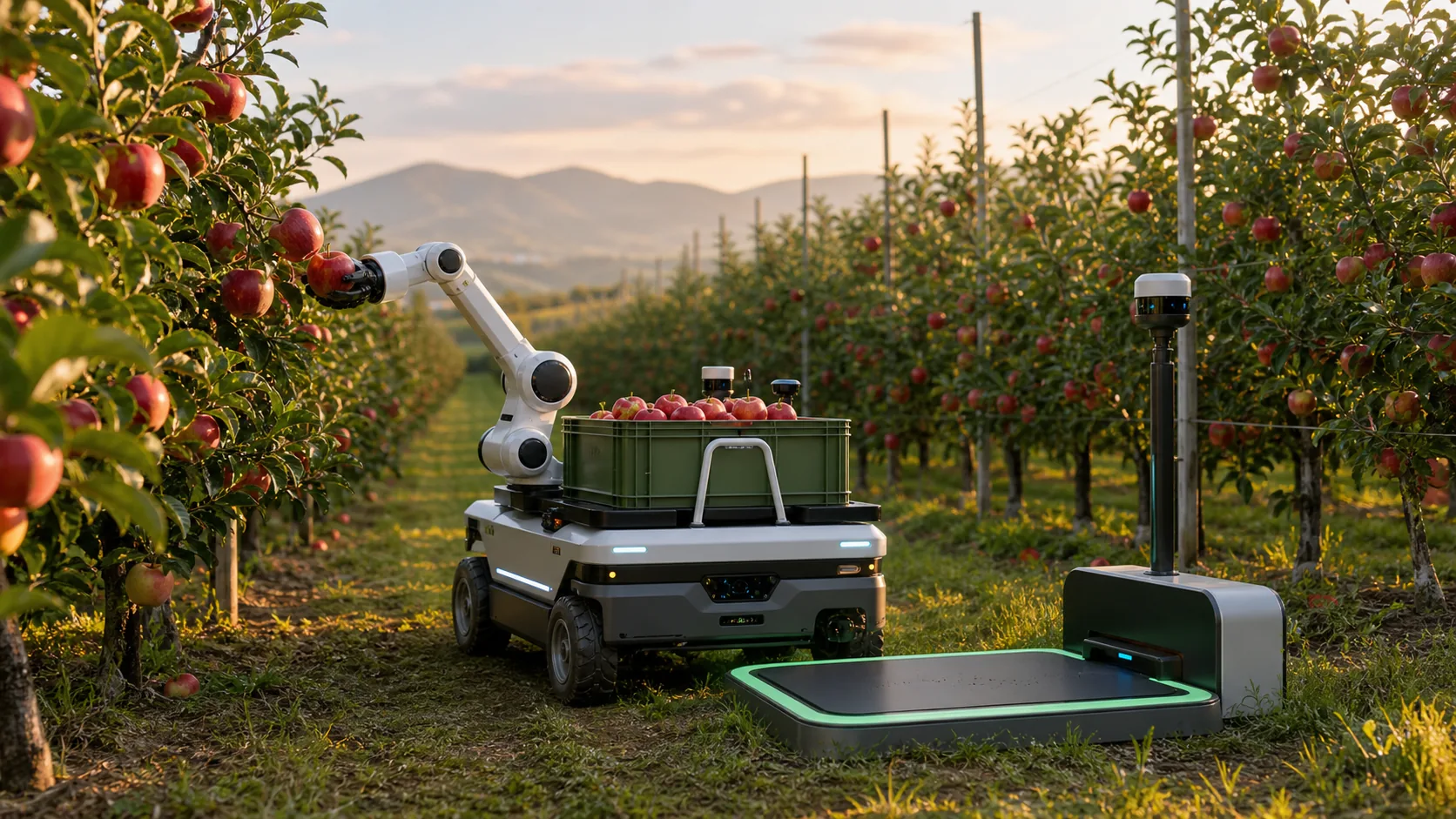
Wireless Charging for Harvesting Robots in Smart Agriculture
Harvesting robots need enough energy to complete picking and fruit-handling tasks during the working day. Manual cable connection can interrupt an otherwise automatic workflow, while dirt and repeated docking can increase charging-interface maintenance.
Use collection stops for charging
A wireless transmitter can be integrated at a fruit collection or unloading station, with a compatible receiver on the robot. Charging during this planned stop is opportunity charging. It can reduce separate charging trips if the stop is long enough and the charger supplies sufficient energy.
This does not mean the robot charges anywhere or works indefinitely without stopping. Size the charger and battery using measured energy consumption, unloading time, travel distance and seasonal workload.
Coordinate automatic docking
Navigation should bring the robot within the permitted gap and offset range. The charger, robot controller and BMS then confirm readiness, control the charging profile and stop power transfer before departure or on a fault. A recovery procedure is needed if docking or communication fails.
Design for orchard conditions
A contactless interface avoids repeatedly mating exposed charging contacts, which can reduce wear and contamination at that interface. Enclosures, connectors, mounting and drainage still need to withstand the site's moisture, dust, mud and cleaning conditions. Wireless transfer does not eliminate all short-circuit or equipment-damage risks.
Check operating temperature, corrosion resistance, thermal performance and maintenance access on the actual vehicle and berth. A field trial should measure successful charging events and task availability before making productivity or cost-saving claims.