
IGV Definition and Typical Applications
IGV definition: Intelligent Guided Vehicle, that is, "intelligent guided transport vehicle". Compared with AGV, IGV is more flexible, does not need any markers to travel, and its path is flexible and changeable. It can be flexibly scheduled according to actual production needs, and its planning is simple, meeting the needs of most factories.
IGV functions and applications: Unlike AGV and RGV, IGV cars add a touch of "wisdom". This wisdom relies on autonomous navigation and positioning technology. Common technologies include laser natural navigation, GPS, visual navigation, etc., which can give the car the ability to avoid obstacles autonomously. In fact, compared with the other three, there are not many practical application cases of IGV. Most of this higher-level intelligent warehousing and transportation equipment is currently in a conceptual state, and it will take some time for the technology to be truly implemented. From a functional point of view, IGV is more flexible and does not require fixed markers while driving. It relies on its own navigation technology to debug the path. Workers can change the path and tasks according to production needs, and are equipped with different functional modules. From this point of view, IGV is more suitable for high-end manufacturing scenarios with future flexibility requirements to achieve intelligent and automated factory overall logistics.
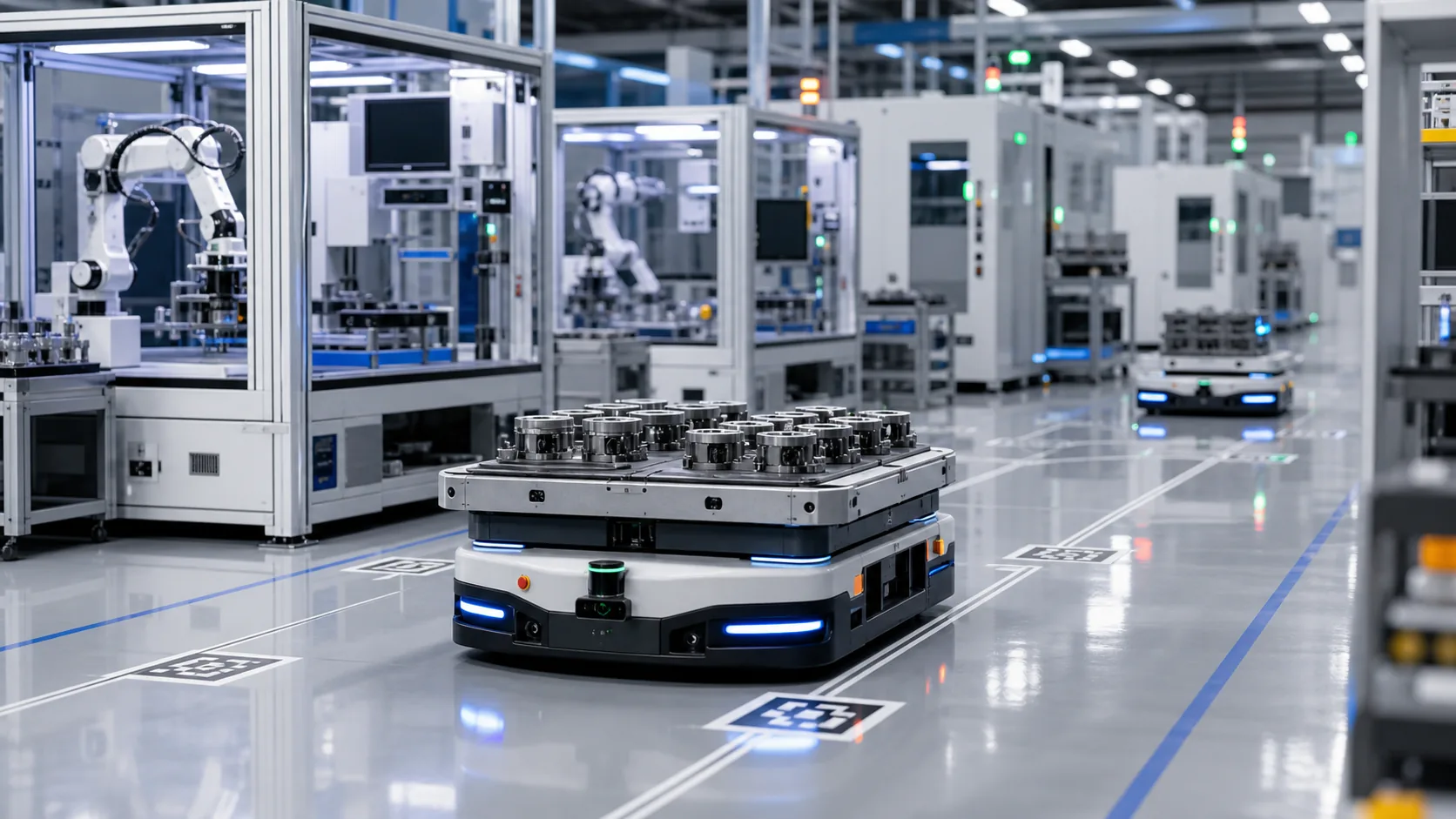
Intelligent Guided Vehicle (IGV for short) is a key component in the automated logistics system, and it represents the latest development of mobile robot technology. IGV is able to navigate without fixed markers and move dynamically using technologies such as sensors, cameras and SLAM (Simultaneous Localization and Mapping). The intelligence and flexibility of IGV make wireless charging necessary in multiple scenarios. The following is a detailed analysis of some key scenarios:
1. Dynamic warehouse environment
scene description:
In dynamic warehouse environments, such as e-commerce facilities, IGVs need to accommodate frequently changing layouts and mixed product handling. This environment requires IGV to have a high degree of flexibility and autonomous obstacle avoidance capabilities.
The necessity of wireless charging:
● Continuous operation: IGV needs to run for a long time in a dynamic warehouse. Wireless charging technology can enable dynamic charging, that is, charging when the IGV moves at low speed, thereby reducing downtime and improving operating efficiency.
● Reduce maintenance: Wireless charging reduces wear and failure caused by frequent plugging/unplugging of charging interfaces, reducing maintenance costs.
● Adaptability: In environments with frequent layout changes, wireless charging systems can more easily adapt to new charging needs without the need to rearrange the charging infrastructure.
2. High-end manufacturing
scene description:
High-end manufacturing has extremely high requirements for automation and intelligence. IGVs need to perform complex tasks in these scenarios, such as precision assembly, material handling, etc.
The necessity of wireless charging:
● Improve production efficiency: Wireless charging technology can enable fast charging of IGV, reduce production interruptions caused by charging, and thereby improve overall production efficiency.
● Enhance security: In precision manufacturing environments, wireless charging reduces the risk of electrical fires and electric shock, improving the safety of the work environment.
● flexibility: The wireless charging system can be flexibly arranged according to production needs without the need for fixed charging stations, making IGV scheduling more flexible.
3. Clean rooms and special environments
scene description:
In clean room environments such as food and medicine, the cleanliness of the environment is extremely high, and IGV needs to operate under dust-free and pollution-free conditions.
The necessity of wireless charging:
● avoid contamination: Wireless charging avoids sparks and pollution caused by plugging/unplugging the charging interface, and meets the environmental requirements of clean rooms.
● Improve reliability: In special environments, the wireless charging system has higher stability and reliability, reducing equipment failures caused by charging problems.
● Reduce maintenance: Wireless charging reduces maintenance work and reduces maintenance costs, especially in clean rooms with extremely high environmental requirements.
4. Large-scale IGV deployment
scene description:
In scenarios where IGVs are deployed on a large scale, such as large manufacturing plants or logistics centers, the number of IGVs may reach hundreds or even thousands.
The necessity of wireless charging:
● Centralized management: The wireless charging system can achieve centralized management, simplifying the charging scheduling and maintenance of large-scale IGVs.
● Improve efficiency: In large-scale deployment, wireless charging can reduce IGV idle time caused by charging and improve overall operating efficiency.
● Reduce costs: Although the initial investment of a wireless charging system is higher, in the long term, its maintenance and operating costs are lower, helping to reduce the total cost of ownership.
5. Unmanned and automated needs
scene description:
In the pursuit of fully automated production environments, IGV needs to operate completely autonomously without manual intervention.
The necessity of wireless charging:
● Enable truly unattended operation: Wireless charging technology can enable autonomous charging of IGV without manual cable plugging of charging cables, truly realizing unattended operation.
● Increase autonomy: IGV can independently plan the charging time according to its own power and task requirements, improving the autonomy and flexibility of operation.
● Optimize scheduling: The wireless charging system can be integrated with the IGV scheduling system to achieve intelligent scheduling and optimization and improve overall operating efficiency.
6. High-intensity working environment
scene description:
In high-intensity operating environments such as ports and mines, IGVs need to operate under harsh conditions for a long time.
The necessity of wireless charging:
● Adapt to harsh environments: The contactless design of the wireless charging system can effectively prevent circuit failures caused by moisture and dust and adapt to harsh environments.
● Improve stability: In high-intensity working environments, wireless charging systems provide a more stable energy supply and reduce equipment failures caused by charging problems.
● Reduce maintenance: Wireless charging reduces maintenance work caused by wear and tear of the charging interface and reduces maintenance costs.
7. R&D and testing environment
scene description:
During the IGV R&D and testing stages, comprehensive testing and evaluation of IGV performance is required.
The necessity of wireless charging:
● Test convenience: Wireless charging technology can be easily deployed in a test environment without the need for complex charging infrastructure, simplifying the test process.
● Performance evaluation: The wireless charging system can provide a stable energy supply and help accurately evaluate the performance of the IGV.
● Technical verification: In the research and development stage, wireless charging technology can be used as part of IGV technology verification to ensure the reliability and stability of IGV in practical applications.
8. Educational and research institutions
scene description:
In educational and research institutions, IGVs can be used for teaching and research purposes in fields such as automation, robotics, artificial intelligence, etc.
The necessity of wireless charging:
● Teaching convenience: Wireless charging technology can simplify the teaching and demonstration process of IGV, making it easier for students to understand and operate IGV.
● research support: In research projects, wireless charging systems can provide stable energy supply and support long-term operation and data collection of IGVs.
● Technology display: Wireless charging technology itself is also part of automation and intelligent technology and can be used as part of teaching and research.
in conclusion
As a key technology for smart logistics and smart manufacturing, IGV’s wireless charging technology has a wide range of application scenarios. Wireless charging not only improves the operating efficiency and autonomy of IGVs, but also reduces maintenance costs and enhances safety. As technology continues to develop and mature, wireless charging technology will be applied in more scenarios, promoting the development of automated logistics and smart manufacturing.